






How Christmas Turns the World Upside Down
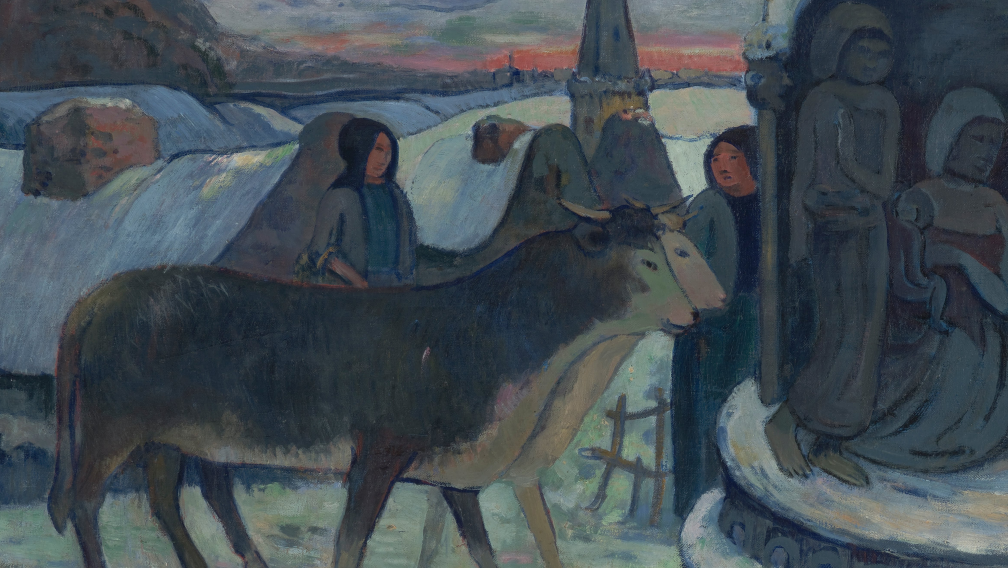
Far from the trappings of prestige and power, God shows up on earth in a barn. Have we forgotten how revolutionary that is?
We tend to imagine the Nativity scene bathed in crisp, clear moonlight — a quiet baby flanked by his impeccably robed parents and a stable full of well-behaved animals. But the truth, as it tends to be, isn’t so tidy.
“The story of Christmas is one where everything goes wrong: a young woman subject to rumors and speculation about her pregnancy; a treacherous journey on the back of a donkey; and the whole thing culminating in a dark and damp cave. Things smell!” says Summerlee Staten, Trinity’s executive director for Faith Formation and Education. “It’s inherently imperfect.”
In contrast to the majestic narratives of our modern holiday, the first Christmas reminds us that love shows up often in the places we least expect it.
“Real life is not always shiny, not always great, not always slick. It’s actually in the broken and messy places that God enters the world,” says Staten. “The story of Jesus in the manger is a story about a God who’s going to do things a different way.”
The long-awaited Messiah was expected to be a conquering warrior king, sent to violently defeat the oppressive forces of the Roman Empire. Instead, Jesus comes as a vulnerable baby. “We’re so familiar with the image of the Nativity, we lose sight of the refreshing, and revolutionary, humbleness of Christmas,” says Staten. “It’s significant that God isn’t born in a gilded palace. In fact, it’s shocking.”
The story of Jesus in the manger is a story about a God who’s going to do things a different way.”
Summerlee Staten
From the manger on, Jesus lives an ordinary life. The bulk of his ministry happens through friendship, and his work is embedded not in showy displays of strength but in his local community — in sharing meals and healing the sick. He spends time with both the poor and the rich, the acclaimed and the rejected. This way of living is offensive to onlookers, and in particular the powerful, because it defies the established social order.
“Jesus is not trying to be subversive; he just is,” says Staten. “He’s not seeking influence. He’s showing us that God’s love will not be bound by our human understanding of power.”
Eventually word gets around about this odd teacher some call the Messiah, this son of a local carpenter, and crowds begin to form. But Jesus doesn’t seize the spotlight. Instead, he retreats.
“Jesus never writes an op-ed. He never gives a keynote speech. He doesn’t do much that’s particularly newsworthy — we have very little extra-biblical account of his actions. He spends the majority of his life in relative obscurity, in his hometown of Nazareth,” says Staten. “If Jesus were walking the earth today, chances are you’d never have heard of him.”
Contrary to expectation, Jesus, God in flesh, is not riding into battle with a sword but kneeling down to wash his friends’ dirty feet. He’s following a calling that ultimately leads him to the cross, where his response to the imperial violence of his day is not more violence — but self-giving love.
“Jesus is a threat to unjust power because he opts out of power completely,” says Staten. “He’s not trying to win; he’s simply living the life in front of him, attuned to the guidance of the Spirit. He’s not interested in being successful; he’s deeply focused on loving the people around him. And that love is what turns the world upside down.”
Each year, Christmas reminds us that God continues to upend our assumptions about how love works — and how we’re meant to live.
“It’s only when we relinquish the chase for perfection or position that we step into the beautiful possibility of relationship with God and one another. Our drive to win at Christmas — or anytime — is antithetical to following Jesus,” says Staten. “The victory we’re promised is not riches or success but life itself — made real in community.”
We cannot achieve our way to security, purpose, or belonging. God comes into each of our stories, just like Mary and Joseph’s, in the untidy, unglamorous, vulnerable truth of right now.
“The humble message of Christmas is that when things fall apart, when our hearts are broken, when we are deeply human — flaws and all — that’s where hope is born,” says Staten. “That’s where love is found.”
Related articles
A Heart Full of Grace: MLK and the Case for Christian Giving

The God Who’s All Around Us

Jesus’s Message for Turbulent Times