





Where Grief Meets Grace
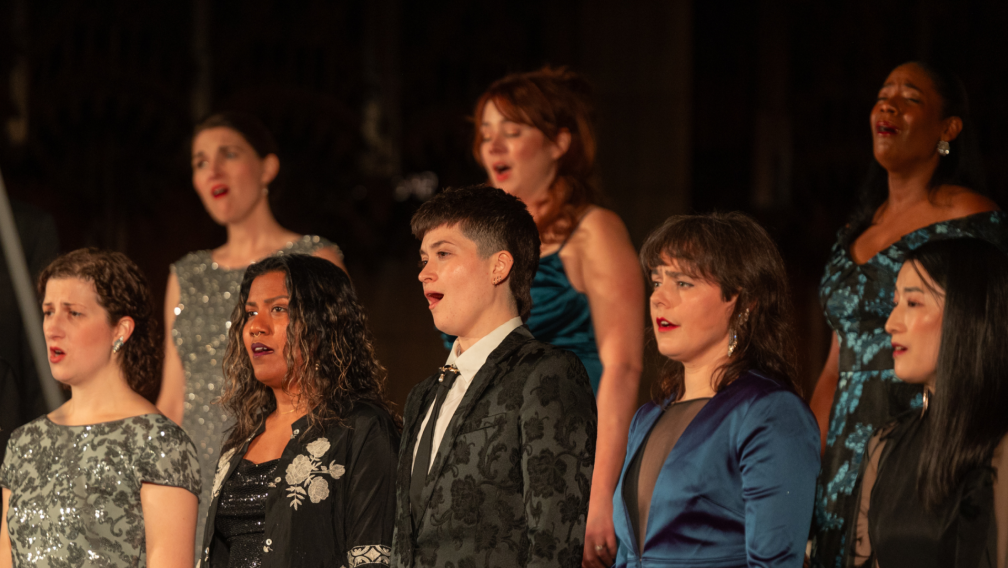
In exploring centuries of music devoted to Mary, the treble voices of Trinity Choir offer a space for reflection, healing, and courageous love.
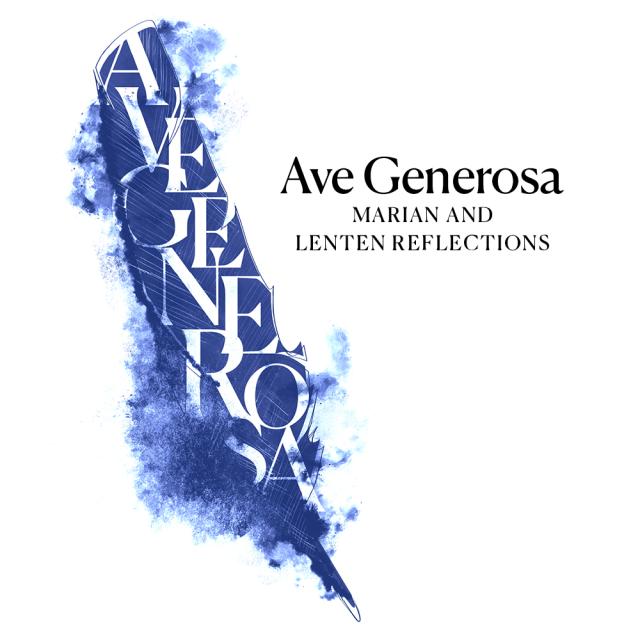
On February 24, at 6pm, Trinity’s Director of Music, Melissa Attebury, will welcome visitors into a candlelit St. Paul’s Chapel for Ave Generosa: Marian and Lenten Reflections, a rare and intimate musical meditation on empathy, compassion, and the courage to stand with the most vulnerable. In this special Lenten concert, the soprano and alto members of Trinity Choir will present music that explores themes of love and the power of presence — through the figure of Mary, the mother of Jesus.
Focusing on Mary’s enduring devotion in the Christian story, from Jesus’s birth through his Passion, this unique program is made up of pieces written through the ages to praise her.
“Mary brings Jesus into this world, of course, but we don’t talk much about her until she is there again at the cross to help him leave it,” says Attebury. “These songs, all written for upper voices, remind us of her faithful, compassionate spirit,” she says. “They reach deep inside to resonate with whatever grief or feelings the listener may be experiencing.”
For the Rev. Michael Bird, Trinity’s vicar, the music speaks not only to the Lenten season, but to a difficult moment in our world, providing a wellspring of strength as well as authentic community.
“Music gives voice to the universal human experience,” he says. “It helps us connect — to God and to one another — and reminds us we’re part of something beyond ourselves. In a time when many feel isolated or overwhelmed, art like this creates a sacred, shared space where it’s not about one person or another, but about us, together.”
The program’s title, Ave Generosa — which translates roughly as “Hail, nobly born” — comes from a plainchant by Hildegard of Bingen, a remarkable 12th-century Benedictine abbess, mystic, and composer. A visionary thinker far ahead of her time, Hildegard wrote extensively about medicine, nature, and theology; advised popes and bishops; and created a large body of music rooted in her spiritual visions. In contrast to the more restrained Gregorian chants of her time, her pieces soar with expression and continue to inspire composers today (including Sarah Kirkland Snider, whose new opera Hildegard premiered in New York City’s Prototype Festival in January with accompaniment by Trinity’s new-music orchestra, NOVUS).
“Hildegard’s chants are among the most luminous treasures of the medieval repertoire,” says Attebury. The program includes several versions of Ave Generosa, including a contemporary setting by Norwegian composer Ola Gjeilo, written in 2011 for the Norwegian Girls Choir. Gjeilo weaves Hildegard’s ancient melody into modern harmonies, creating a piece at once hauntingly ethereal and deeply joyful. A second contemporary setting, written by British composer Margaret Rizza in 2007, offers a more traditionally meditative interpretation building to a radiant burst of sound at its conclusion.
The concert also includes multiple versions of another Hildegard chant, Caritas abundant (“Love and charity abound in everything”), which portrays divine love as a redemptive, compassionate, and unifying force that bridges all divides. In Karitas á Four, contemporary composer Zanaida Stewart Robles transforms Hildegard’s original single-line melody into a rich, four-part work for treble voices, adding layers of harmony while preserving the chant’s contemplative core.
What can we do in our art to compete against what is happening in our world?
MELISSA ATTEBURY, DIRECTOR OF MUSIC
While Hildegard anchors the program, the music spans centuries to show how composers across time have returned to Mary as a symbol of beauty, strength, and protection. “We often forget there’s this great breadth of music devoted to Mary,” says Attebury. “I wanted to highlight some of the gems.”
Two works draw on the biblical Song of Songs, a poetic Old Testament celebration of steadfast love that has long been associated with Mary.
The first, Tota pulchra es (“You are completely beautiful”), written by French composer Maurice Duruflé in 1960, combines chantlike a capella simplicity with glowing harmonies. “Duruflé bridges ancient devotion and modern musical language,” says Attebury, “creating music that feels both pure and luminous.”
The second, Nigra sum, by contemporary Catalan composer Bernat Vivancos, is devoted to the image of the Black Madonna — an ancient and powerful representation of Mary that emphasizes her connection to the earth, fertility, and powers of protection. Over time, the Black Madonna has become a symbol of resilience and hope for marginalized communities. Set to the words, “I am black but beautiful, O daughters of Jerusalem,” the work, receiving its New York City premiere in this concert, “invites reflection on the universality of grace, and embraces all humanity within the sacred,” says Attebury.
The emotional and musical centerpiece of the evening will be Francis Poulenc’s Litanies à la Vierge Noire (Litanies to the Black Virgin), written specifically for treble voices. Attebury calls it “the crowning jewel” of the program — and a rare opportunity to feature the soprano and alto sections of Trinity Choir.
“We don’t often split the professional choir for a performance,” said Attebury. “So this is a special chance to showcase our upper-range singers. It’s a companion of sorts to last year’s Lenten Meditations concert, which highlighted our countertenor, tenor, and bass voices.”
The Litanies — the first piece of sacred music Poulenc ever composed — was inspired by a life-changing visit in 1936 to Rocamadour, a 12th-century pilgrimage site in France that houses a wooden carving of the Black Madonna. Coming just days after Poulenc learned a dear friend had died in a car accident, the visit inspired him to return to the Catholicism of his youth. The 28-inch statue is famous in equal measure for its simplicity and the complex emotion it evokes; the composer’s grief is palpable in the work.
“Poulenc had a profound spiritual awakening at Rocamadour,” says Attebury, “and the Litanies combine his characteristic lyricism with deep humility and fervent prayer. The piece is deeply personal, yet it lifts the listener into something completely transcendent.”
For Attebury, the question underlying the entire program is both artistic and moral. “What can we do in our art to compete against what is happening in our world?” she asks. In this very special hour of music, she and Trinity Choir will offer one answer: Create a space where compassion, courage, and shared humanity can be heard and held together.
Ave Generosa: Marian and Lenten Reflections will be performed on February 24 at 6pm in St. Paul’s Chapel, featuring the sopranos and altos of Trinity Choir; Alcée Chriss III, organ; Tracy Cowart, medieval harp; and Melissa Attebury, conductor.
See our full spring season music lineup.
Sign up for our weekly music newsletter to learn about upcoming concerts and more.