





Unlocking Housing Justice for All
New Yorkers who receive rental assistance often face discrimination while searching for a home. Trinity grantee Unlock NYC is giving them tools to fight back.
New York City is facing its most severe housing crunch in half a century. Vacancy rates have plummeted, rents continue to climb, and more than 100,000 people sleep in shelters every night, including over 35,000 children. For individuals and families on the margins, housing vouchers — government rental assistance programs — are meant to serve as lifelines that help people transition out of shelters and into stable homes. Yet, landlords and brokers routinely refuse to accept voucher holders as tenants.
Seeking to address this urgent need, Trinity Church’s Housing and Homelessness initiative has partnered with Unlock NYC, a nonprofit that provides direct support to prospective tenants, collects data on discrimination, and holds landlords accountable — all in an effort to improve housing at a systemic level.
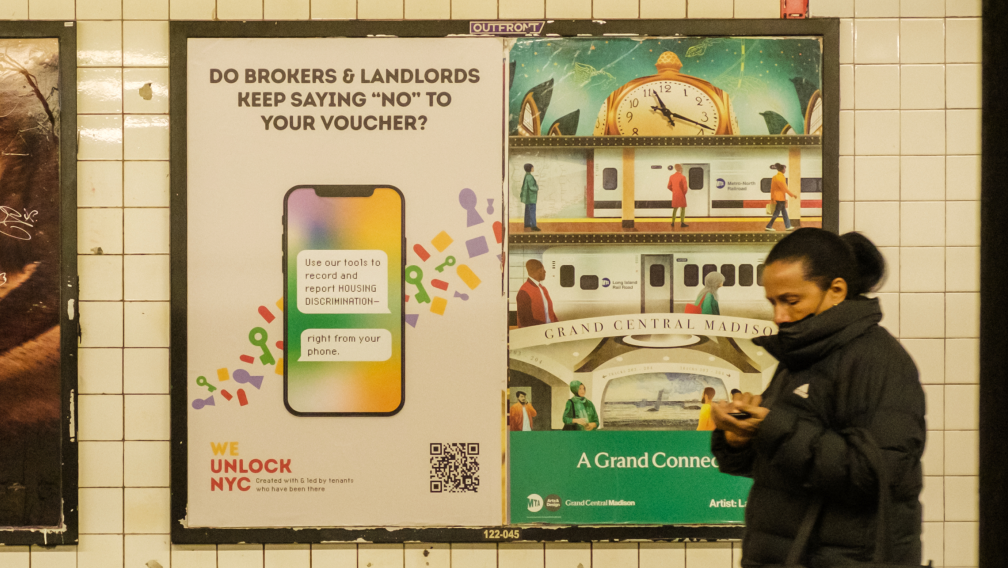
At the heart of Unlock NYC’s work is the Rights Recorder app, a web-based tool that empowers voucher holders to document and report bias. Since 2022, Trinity Church has invested $375,000 to scale the app’s reach, ensuring more people have a fair shot at permanent housing. Trinity has also connected Unlock NYC to the nonprofit media agency F.Y. Eye, funding a citywide marketing campaign to expand awareness of the app and the issue of voucher discrimination.
Unlock NYC’s work is an essential step toward building a city where everyone can flourish, said Thehbia Hiwot, Trinity’s managing director of Housing and Homelessness. “When landlords shut the door on voucher holders, they are not just rejecting tenants — they are fueling homelessness, reinforcing segregation, and harming the physical and mental well-being of thousands,” said Hiwot. “This is why housing is a sacred human right: It’s about protecting the health, safety, and dignity of all our neighbors.”
The U.S. Census Bureau’s latest figures suggest the number of vacant and available rentals in New York City has dropped to 1.4 percent, the lowest vacancy rate since 1968. For apartments under $2,400, the vacancy rate fell below 1 percent, leaving virtually no affordable units available — adding another layer of difficulty to the prejudice voucher holders already face.
In addition to battling long-standing stigmas against people who rely on public assistance or come from marginalized communities, voucher holders must also contend with landlords unwilling to navigate the bureaucratic hurdles of receiving rent from the government’s voucher programs. Discrimination against people who use rental assistance, also known as source-of-income discrimination, has been outlawed in New York City since 2008. Still, it remains one of the most common forms of housing bias reported to the NYC Commission on Human Rights.
Unlock NYC reports that many landlords, particularly corporations that own multiple buildings, have developed increasingly sophisticated tactics to evade enforcement. Ghosting is the most common tactic used by landlords or brokers: Once a voucher is mentioned, communication abruptly ends. Other tactics include claiming a unit is suddenly unavailable, imposing exclusionary credit or income requirements, steering tenants away from desirable neighborhoods, or even preying on people’s desperation through illegal fees and scams. These practices create a maze of obstacles designed to keep voucher holders out.
The effect is devastating. Currently, more than 60 percent of Unlock NYC users are single mothers, and the majority are experiencing homelessness. Unlock NYC’s head of communications, Jessica Valencia, has seen firsthand how source-of-income discrimination keeps voucher holders and their families in limbo for years. “It takes a major toll on people’s mental health. They dive into depression, they feel hopeless and frustrated. Folks lose time; they’re not able to focus on their lives, return to the workforce, or get back on their feet,” Valencia said. “Unless you’ve been in that situation, you don’t realize the impact of not having stable housing and a bed to lie on.”
The Rights Recorder app shifts the balance of power, using voucher holders’ experiences to demand accountability from landlords. Unlock NYC began developing the Rights Recorder in 2019 after meeting with impacted individuals at Blue Ridge Labs, a Brooklyn-based social innovation incubator. The app’s design came directly from voucher holders who were already trying to collect evidence of discrimination. The Rights Recorder streamlined that process, creating a platform where prospective tenants create paper trails by recording phone calls and capturing screenshots of texts and emails with brokers. One-on-one orientation calls help the Unlock team connect with new users and provide referrals to legal service providers, who can then review evidence, conduct additional investigations, and help clients take action.
Unlock NYC taught me to pay attention to all signs, document evidence correctly, and most importantly, advocate for myself.
Brittany M., Rights Recorder user
Valencia was one of the app’s earliest beta testers. In 2019, she faced multiple roadblocks while searching for housing with a voucher. She wanted to raise awareness about the discrimination she encountered, but she didn’t know how. “I was super frustrated and not able to get in touch with anyone at 311 [a hotline that provides access to non-emergency City services],” she recalled. After discovering Unlock NYC through a Facebook group, Valencia learned how to file a report. Eventually, she found an apartment. “That’s why I’m so passionate about giving back to the community and making sure others don’t have to go through the same struggles — or that they’re at least better prepared,” she said.
Since its official launch in January 2021, the Rights Recorder app has generated more than 3,000 reports from over 1,000 users. Unlock NYC has distributed 7,000 educational pamphlets to make sure voucher holders know their rights. Emerging leaders from the app’s user base have joined Unlock’s Leadership Collective, meeting monthly to shape the organization’s direction and develop skills to advocate for housing justice.
The nonprofit’s initiatives are changing outcomes for voucher holders. With its support, over 250 households have secured stable housing, and more than half found homes within six months. By contrast, without Unlock’s intervention, the city’s main rental assistance program shows far slower results. According to New York City’s comptroller, it takes an average of 10 months for only 21 percent of CityFHEPS holders to find a home.
My Section 8 journey has been filled with discrimination, scams, and constant stress from brokers and landlords who treated my voucher like a burden instead of a lifeline. Unlock NYC finally helped me understand my rights. I still have faith that change is coming, and sharing my story is part of that change.
JT, Rights Recorder user and Leadership Collective member
Unlock NYC is also strengthening housing advocacy in New York through its user-sourced data. Reports submitted through the app feed into a citywide mapping tool that highlights neighborhoods where vouchers are more likely to be rejected. Unlock NYC has also published reports detailing common denial tactics and identifying landlords who are serial discriminators. By collaborating with enforcement agencies, including the NYC Commission on Human Rights and the New York State attorney general’s office, Unlock NYC ensures this data leads to investigations and accountability.
Their research is driving real change — in August 2024, the team’s work helped secure a $1 million settlement against one of the landlords named in the serial discriminators list, the largest civil penalty for housing discrimination in the city’s history. The agreement also set aside 850 apartments for voucher holders.
For Hiwot, these wins send the powerful message that source-of-income discrimination has no place in New York City. “Housing vouchers open doors, transform lives, and strengthen our city. They help survivors of domestic violence find safety, give students the stability needed to learn and thrive, help families emerge from poverty,” Hiwot said. “It’s our collective responsibility to eradicate the barriers that prevent low-income individuals and families from accessing all that a voucher promises. Every New Yorker deserves a stable place to call home.”