

A Path to Peace: Five Questions for Maya Soetoro
The pioneering peacebuilder reflects on everyday leadership, how stories can change everything, and why the future is brighter than we think.
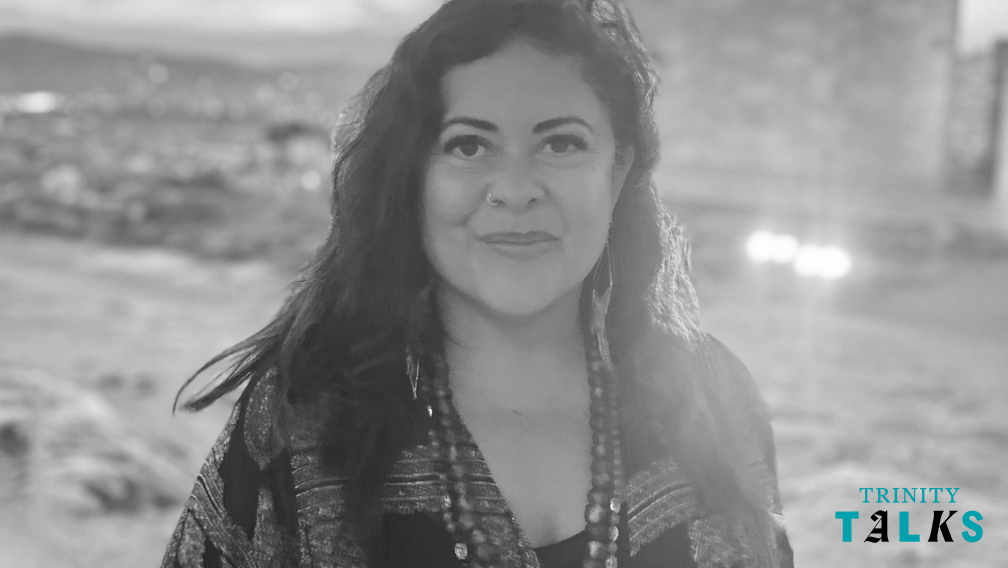
Can a name influence a life? When that name belongs to Maya Soetoro, PhD — educator, mentor, and peace advocate — there is little doubt. Named after Maya Angelou, Soetoro says the poet has always been an inspiration, illuminating her path as she taught conflict transformation to college students, built multifaceted peacebuilding organizations, and found her own inner poet in the hauntingly beautiful Ladder to the Moon, a children’s book inspired by her mother, her own two daughters, and a Georgia O’Keeffe painting.
“Mom, who named me, guided me and my brother to live with integrity, to work toward justice, and to use storytelling as a bridge between hearts and minds,” says Soetoro, who is Barack Obama’s half-sister. “Maya Angelou modeled that so fully; I’ve tried to carry those lessons through my own work.”
Now a consultant for the Obama Foundation, developing Asia-Pacific programming, and a faculty specialist of the University of Hawaii’s Matsunaga Institute for Peace and Conflict Resolution, where until recently she was director and graduate chair, Soetoro continues to see peacebuilding as a sacred act. And, like her namesake, she uses the transformational power of words to heal the world.
We recently had a chance to speak with Soetoro — who on Sunday, September 28, joins Summerlee Staten, Trinity’s executive director, Faith Formation and Education, for Trinity Talks — about the part we all can play in building a more peaceful future.
What do “peace” and “peacebuilding” mean to you?
To me, peace is not the mere absence of war — that’s what I’ve learned to call negative peace. Positive peace is the presence of justice, equity, compassion, and healthy relationships between people and with our planet. Peacebuilding is the daily, deliberate work of nurturing those relationships — of creating systems and cultures that allow people and nature to thrive together. I often think of it as an algorithm: There is building peace within, which means cultivating personal peace and self-awareness; building peace between, which involves fostering empathy and respectful dialogue in relationships; and building peace in community, which is about engaging in service and collective action for the common good.
In the 21st century, peacebuilding must also be rooted in conflict transformation — not just resolving disputes but changing the conditions and narratives that give rise to them. Restorative narrative plays an important role here: It invites us to tell stories that heal, that give dignity to those harmed, and that repair our shared humanity. Peace is active, embodied work; we live it with our words, our gestures, and the way we show up for others.
You cofounded The Peace Studio to nurture artists and journalists, recognizing that how we tell stories and share images can shift our culture. Please tell us more about how a journalist’s story, a novelist’s manuscript, or a visual artist’s piece can help shape a better future?
Art has the power to disrupt hopelessness. A journalist’s story can illuminate a truth that has been ignored, a novel can invite readers to inhabit another person’s reality to build courageous empathy, and a painting can evoke compassion without a single word. When artists and storytellers imagine a more just and harmonious future, they invite all of us to step into that vision.
Restorative narrative is especially important here, as it focuses not on despair, but on the journey toward healing. It gives space for people to see themselves not only in moments of suffering but also in moments of imagination, growth, and reconciliation. In that way, art becomes both a mirror and a map, helping us see where we are and where we might go together.
In one of your own narratives, the picture book Ladder to the Moon, there’s a subtle message that people are stronger than they know. Can you talk about the importance of fostering resilience? And what you mean when you say, “Resilience is resistance”?
Resilience is about remembering that we can adapt, endure, and still protect our sense of purpose and community. True resilience is not just about survival but about innovation and an ongoing capacity to act and imagine, even in the presence of suffering. When I say, “Resilience is resistance,” I mean that sustaining hope and continuing to care for ourselves, each other, and our planet, in the face of injustice or conflict, is itself an act of defiance. It’s a practice that starts with peace within — the grounding that comes from knowing who we are and what we stand for. Resilience allows us to keep showing up in ways that transform conflict rather than simply survive it. We can heal by being in community. And it’s reciprocal: As we heal the individual body, so too can we heal the community body.
You and Stanford professor Maxine Burkett cofounded the Institute for Climate and Peace with the express aim of integrating peacebuilding and climate action. Can you explain how those two goals intersect?
Climate disruption is a conflict multiplier — it deepens inequality, strains resources, and can push communities toward unrest. But it’s also a place where peacebuilding can be deeply transformative. If we address climate change in inclusive and equitable ways, we can strengthen trust, reduce violence, and improve livelihoods to make communities more resilient in the face of the climate crisis.
I believe environmental justice is spiritual work because it’s rooted in reverence for the Earth, for future generations, for the interconnection of all life. It also embodies social justice; the air we breathe, the food we eat, and the safety of our homes are not abstractions; they are physical realities that determine our health, freedom, and capacity to flourish. Protecting our planet is both survival work and sacred work.
With your deep experience in transforming conflict, do you have any advice that might help the average person navigate their relationships in these politically divisive and fraught times?
It starts with curiosity. When we lead with questions rather than assumptions, we open space for dialogue. Conflict transformation reminds us that the goal is not to “win” an argument but to transform relationships so they can hold differences without breaking. The “algorithm” I introduced earlier — peace within, peace between, peace in community — is useful here. Take care of your own inner state so you can listen well, focus on building trust in your interpersonal relationships, and work collectively on issues bigger than any one disagreement. Embody your values, not just in what you say but in how you carry yourself and how you treat others, especially those with whom you disagree. In a time of loud division, quiet dignity and a willingness to learn about others can be powerfully radical acts.
Please register to join us for Trinity Talks: Maya Soetoro on Sunday, September 28 at 1pm in Trinity Commons.
This interview has been edited for length and clarity.