


Forgiveness as Resistance: Six Questions for Author Kevin Sack
In reporting on the 2015 murder of nine parishioners at one of the nation’s oldest Black churches, the Pulitzer Prize–winning journalist uncovered a story about how tragedy can galvanize faith.
On June 17th, 2015, a 21-year-old white supremacist entered Emanuel African Methodist Episcopal Church in Charleston, S.C., took a handgun out of his bag, and began shooting the same people who had only moments earlier welcomed him into the Bible study session they were conducting that evening. When he was done, nine Black church members — including the church’s senior pastor — were dead. After being apprehended by authorities the next day, the gunman confessed to the murders and said he had specifically targeted the historic church because he had hoped to ignite a race war.
New York Times senior writer Kevin Sack was sent to cover the incident and its aftermath, including the trial of the gunman, who was ultimately found guilty on state and federal charges and sentenced to death. In the course of his reporting, Sack, a native Southerner who has spent 40 years writing about national affairs and shared in three Pulitzer Prizes, met and interviewed dozens of parishioners of “Mother Emanuel,” as the church has come to be known. During these conversations, Sack discovered within church members an astounding capacity not only for faith and resilience, but also for forgiveness. The experience compelled him to dive more deeply into the history of Emanuel (the oldest African Methodist Episcopal congregation in the American South), the denomination it represents, and the larger Black church in America, including the role that all three played during some of the most pivotal chapters in our national narrative: slavery, Jim Crow, and the Civil Rights Movement.
Mother Emanuel, the book that grew out of Sack’s reporting, is a deeply meditative study of how Christian concepts of grace and forgiveness have remained foundational to the Black church, even after four centuries marked by white supremacist subjugation and exploitation, the systematic exclusion of African Americans from civic institutions, and ongoing legacies of horrific physical violence that truly test the limits of our ability to forgive.
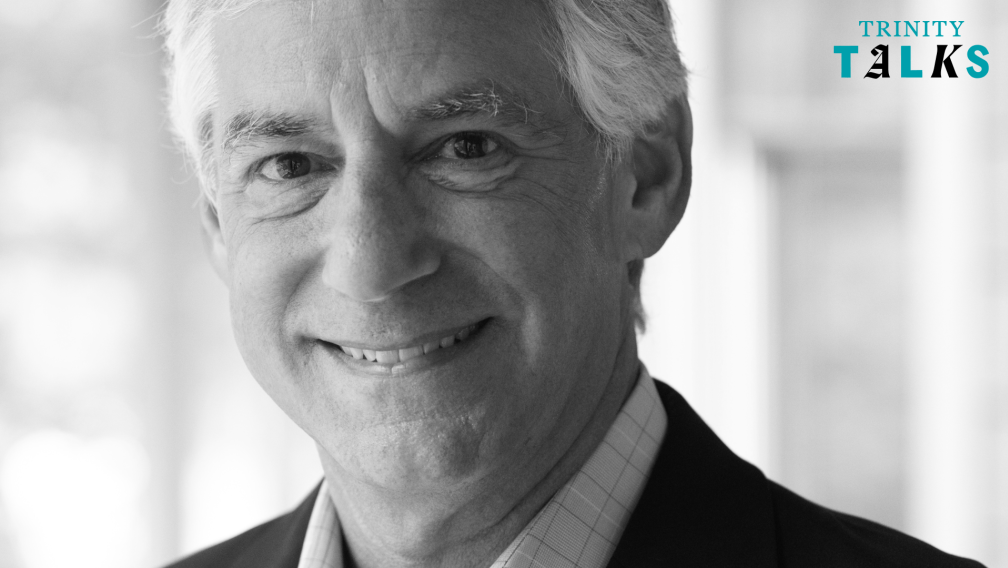
Sack — who on Thursday, September 25th, will be in conversation with Trinity’s rector, the Rev. Phillip A. Jackson, as part of the Trinity Talks series — recently spoke with us about his book and the church that inspired it.
The murder of nine Black Emanuel parishioners by a white supremacist gunman in 2015 is the starting point of this book, but it’s not what this book is about. What, to you, is this book about instead?
It’s about the two centuries of remarkable history that brought this congregation to that moment, to explain why it mattered that it happened where it did. It’s also an attempt to use the congregation as a narrative vehicle to tell a broader story of African American life in the Southern city that may be the most significant to our racial history. Lastly, it’s an ode to the import and power of the Black church in the ongoing freedom struggle, and an exploration of the meaning of forgiveness in the context of hundreds of years of Black suffering and of Black Christianity.
Mother Emanuel was based on reporting you did for The New York Times about the 2015 mass shooting. Can you describe the moment you realized there was a much bigger story to tell?
The book’s animating concept — that a broad swath of Charleston’s history could be related through the church — struck almost immediately, literally the night of the shootings as I was Googling the church and finding the basic outlines of its story. It came into clearer focus as I dug deeper, and particularly as I discovered central figures who could be used to represent important eras. Barack Obama’s astonishing eulogy for the Emanuel Nine, which I covered for the Times, also played an important role in shaping my thinking.
The history of the AME church seems to be one of almost perpetual tension between theological conservatism — which stresses individual piousness, self-discipline and repentance — and the realization that group mobilization was the only way Black people in America could ever find justice and move towards equality. What impact did this tension have on the church’s role in the Civil Rights Movement?
That tension springs from this notion that, in the African American experience, the very formation and maintenance of autonomous Black institutions — even conservative ones like AME Churches — were themselves radical acts. Self-preservation became an imperative, and this could run headlong into the existential threat at times posed by liberation theology [a Christian movement emphasizing liberation of the poor and oppressed] and its call for activism. During the Civil Rights Movement in Charleston, Emanuel’s pastor, Rev. B.J. Glover, was also the local NAACP branch president and led marches from the church. He held mass meetings in the sanctuary, including one in 1962 headlined by Martin Luther King, Jr. He soon learned he was way out in front of his congregation, which feared that his activities might get the church dynamited, as had happened in Birmingham. It could make for an uneasy relationship.
Almost immediately after the murders of nine Emanuel parishioners, many people were surprised to hear survivors — including the relatives of those who had just been killed — say they had already forgiven the shooter (who, it should be pointed out, has never expressed remorse for his actions). Were you surprised?
Like so many, I was simultaneously awestruck and befuddled, and my desire to understand it in historical and theological context drove this whole exploration. I figured that if there were any way to make sense of what those family members had done it would be found in the histories of the church and the denomination.
Given Black Americans’ centuries-old and ongoing experience of racism and brutality, why do you think the concept of forgiveness still holds such sway in the Black church? In light of the enormity of what happened at Emanuel, how could the Christian belief in forgiveness be stronger than the basic human tendencies towards righteous anger and the desire for justice?
Whether forgiveness and justice are mutually exclusive is at the heart of the discussion in my epilogue. Forgiveness obviously has deep Scriptural roots, as an aspiration if not a commandment. But I argue that it has been molded by the Black church into a psychological survival mechanism, a form of release that is better understood as an unburdening than an undoing. Therefore, anyone who perceived that the forgiveness expressed toward gunman Dylann Roof was primarily for him may have misunderstood its intent. Although it seemed the purest expression of Christianity we had witnessed, the intended benefit here was more for the forgivers than the forgiven.
Believers and nonbelievers alike struggle with the concept of forgiveness. Did your experience interviewing survivors of the shooting have any impact on yours? How, in these challenging times, can their resilience help inform our own?
Despite engaging so deeply with the question, I have real doubts that I could have verbalized forgiveness for the remorseless, racist murderer of a family member two days after the act. I relate more to those survivors who describe forgiveness as a journey they travel at their own pace, without guarantee of a destination. That said, I do now, when angry, find myself asking “What would [forgiving family members] Felicia Sanders or Anthony Thompson do?” And while I’m not sure that these are the times for it, I do recognize that, under the right circumstances, forgiveness can constitute a reclamation of agency and thus its own form of resistance against recurring victimization.
To hear more, please register to join us for Trinity Talks: Kevin Sack on Thursday, September 25 at 6:30pm in St. Paul’s Chapel.