
Five Things You Didn’t Know About Trinity’s “Messiah”
Performed for the first time in 1770, Trinity Church’s take on the Handel masterpiece has become a holiday institution. But in a city brimming with “Hallelujah” choruses, what sets our version apart?
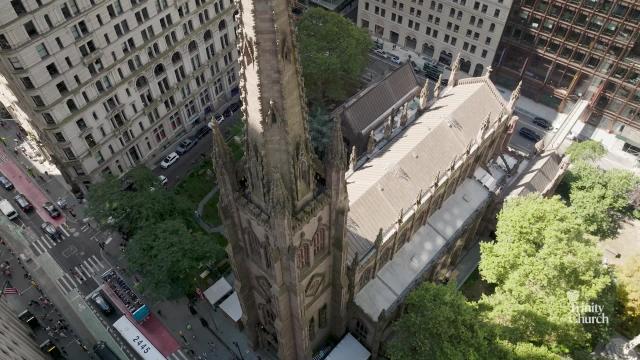
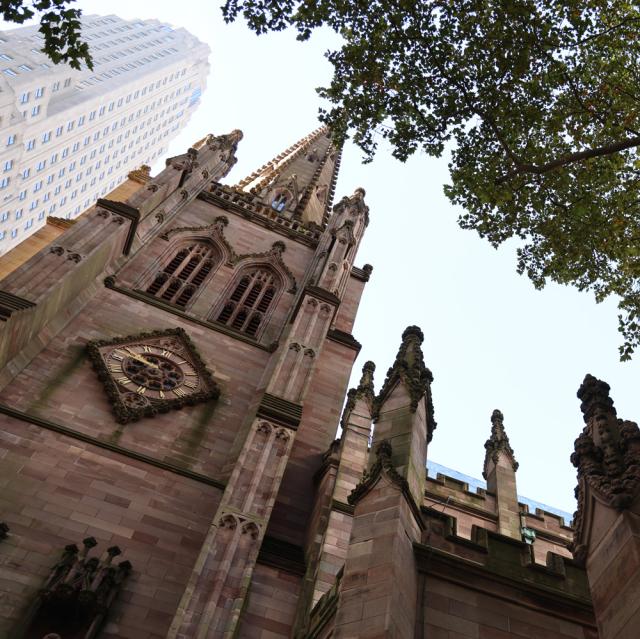
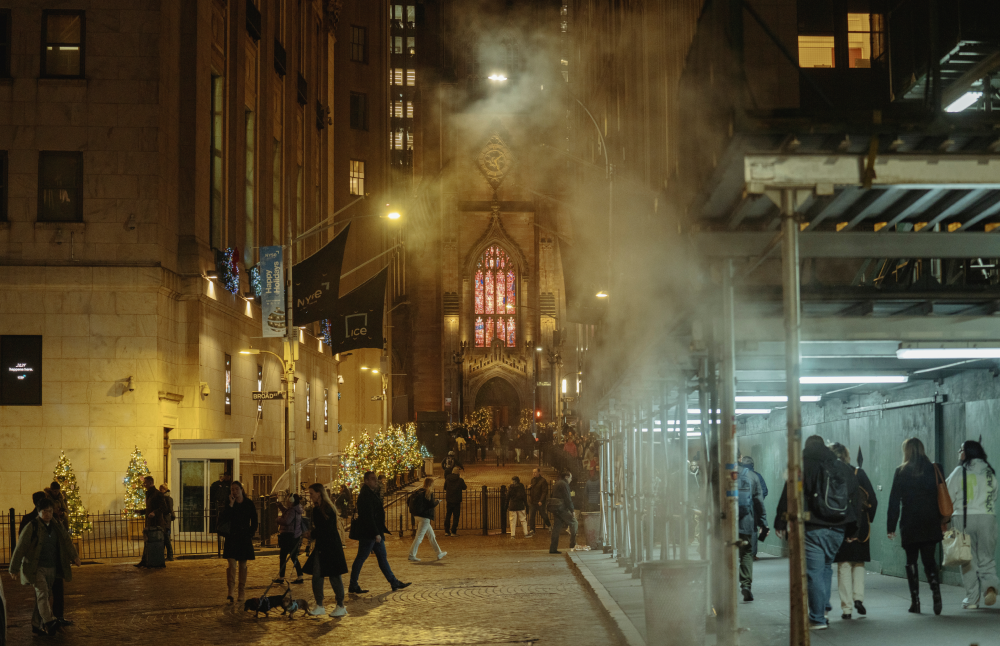
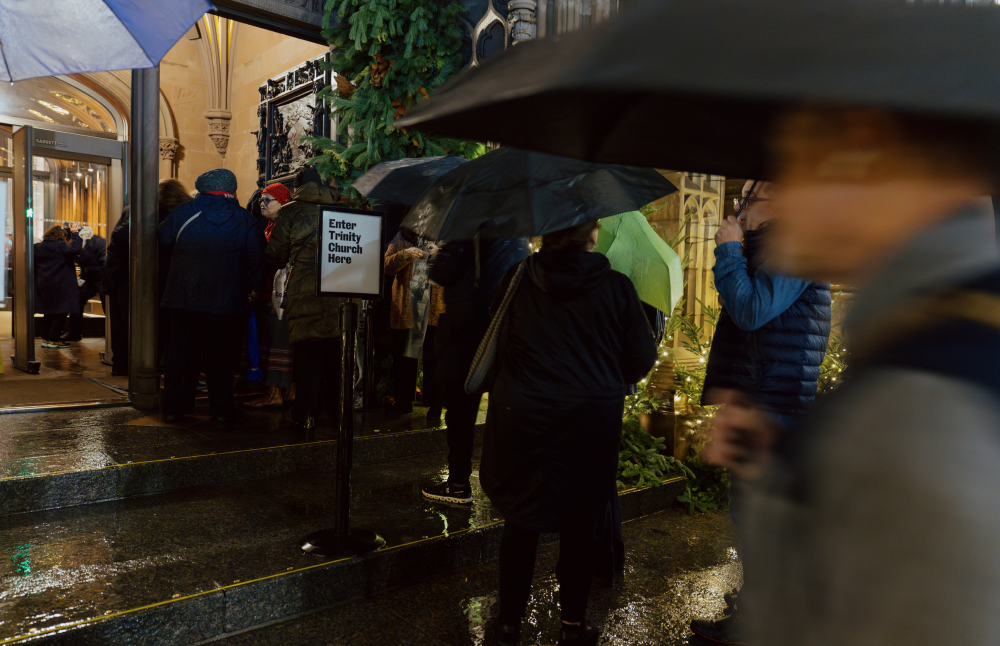
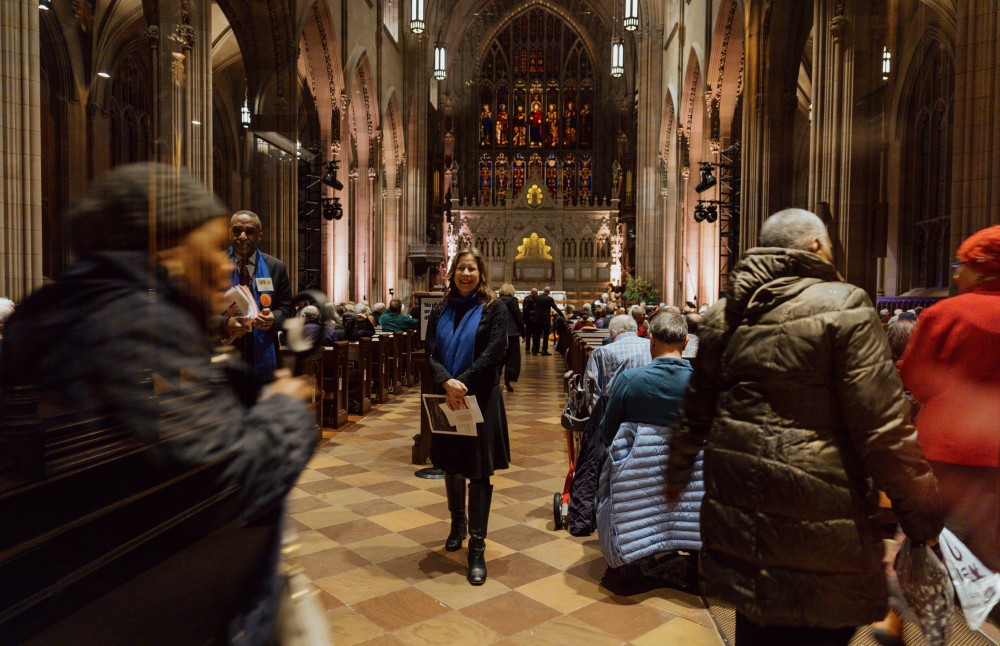
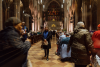
For three nights each December, people of all ages — music lovers, Baroque aficionados, seekers of holiday cheer — line the sidewalk of a greenery-bedecked Trinity Church, waiting to pass through the carved-wood vestibule into the glowing warmth inside. There, they’ll leave behind the cold busyness of Wall Street and enter … Christmastime.
While the decorations and musicians may vary from year to year, one thing is certain: Trinity Choir and Trinity Baroque Orchestra will help you suspend time for just a bit, delivering a performance of Handel’s Messiah that is nothing short of awe-inspiring. The annual event is beloved not only by its loyal audience — tickets sell out within days and livestream viewers tune in from as far away as Australia — but also by the singers, musicians, directors, historians, and behind-the-scenes experts of all stripes who bring it to life. We asked a few of them to tell us what makes Trinity’s Messiah so unique.
About that 1770 performance: Was it the first time Messiah was heard in the New World?
The North American premiere of Messiah did happen on Broadway, but not at Trinity Church. In January 1770, William Tuckey, Trinity Church’s former clerk and choirmaster, finding himself in dire financial straits, staged a benefit concert for himself down the street at Mr. Burns’ Tavern, where soloists performed pieces from Handel’s oratorio. Tuckey had been fired from Trinity after a short tenure and had spent the next 14 years racking up debt. So he charged 8 shillings admittance, about $40 today.
In October of the same year, though, Trinity Church put on its own Messiah — performing selections at a benefit for “The Corporation for the Relief of the Widows and Children of Clergymen of the Communion of the Church of England in America.” According to The New-York Journal, the performance earned “upwards of 200 pounds” for the charity and kickstarted our long association with Handel's masterwork.
Trinity Church performed selections from Messiah throughout the 19th century, at all times of year, but it was staged in its entirety on April 25, 1867. Members of all the Trinity choirs gathered for the concert in St. John’s Chapel, a Tribeca congregation within Trinity's parish. In 1894, the church began the Messiah-at-Christmastime tradition, but we didn’t begin to regularly present all three parts until 1995.
— Kathryn Hurwitz, Trinity Church archivist
Another thing that makes Trinity’s Messiah “historic” is the Baroque instruments — which means we’re hearing the music as it actually sounded in Handel’s time. What does that add to the experience?
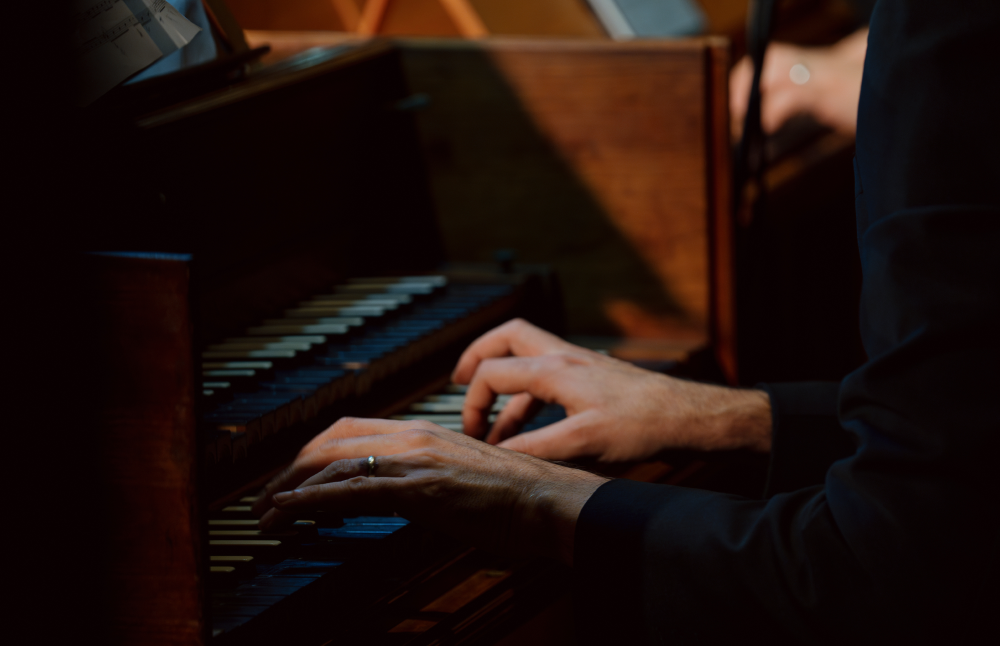
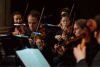
The sounds of an orchestra of 18th-century instruments can only be described as magical. These period instruments speak with a totally different language than those you’d hear at a modern orchestra — like the New York Philharmonic — which have been engineered over the years to blend an enormous range of colors into hybrid hues. Baroque instruments display a more limited palette of soft yet vibrant primary colors. If you’ve only experienced the music on modern instruments, hearing the mingling tones of the strings, woods, and brass of Handel’s day is like seeing an image full color after viewing it in black and white.
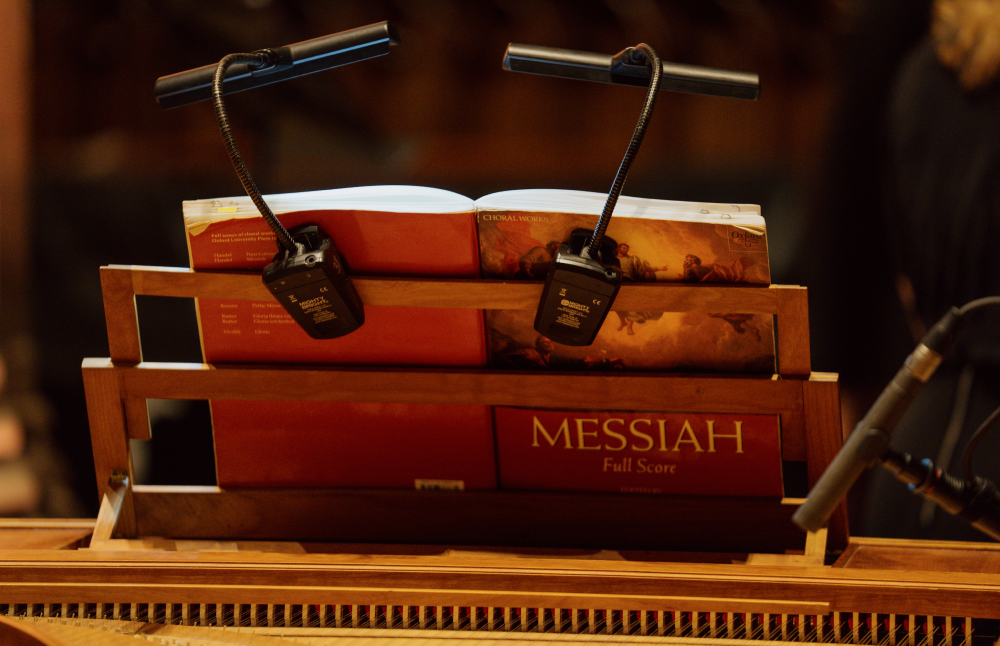
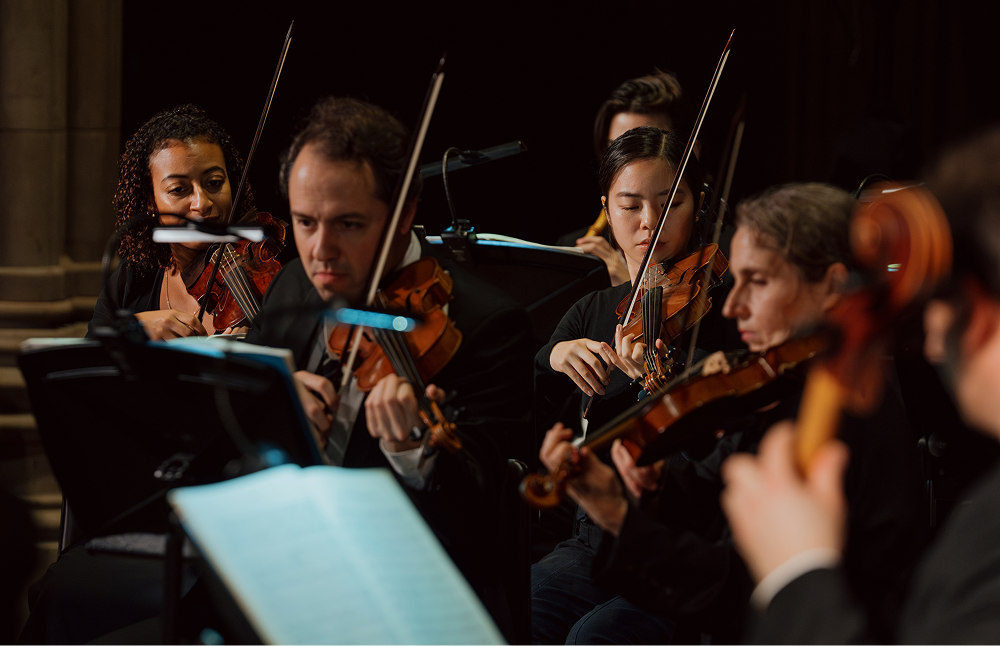
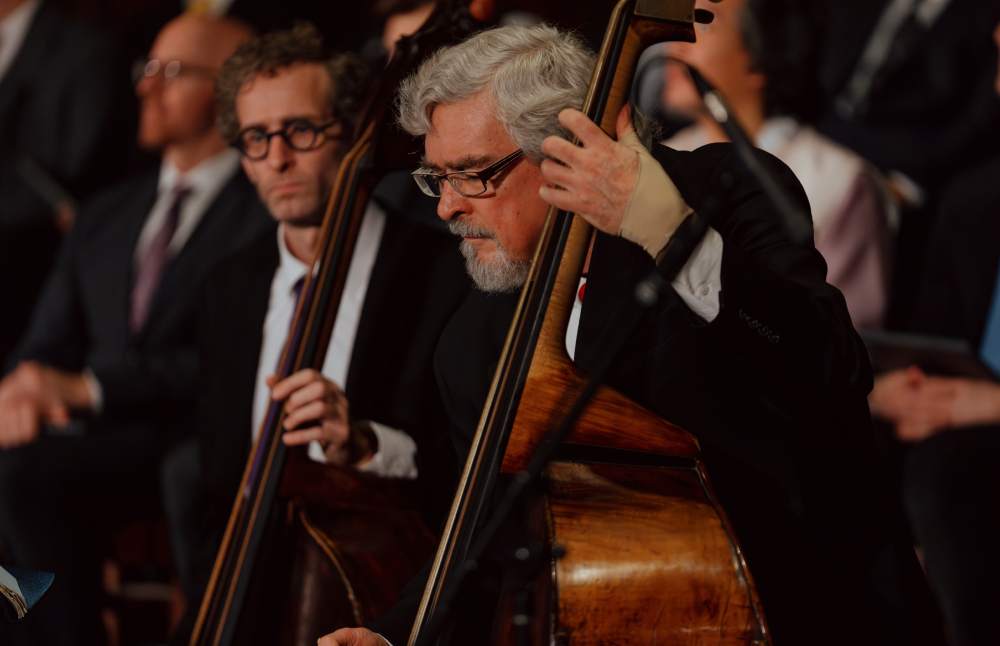
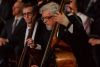
A Baroque orchestra like Trinity’s will have violins, cellos, violas, and basses whose strings are made from sheep gut — which has a natural rasp and honeyed brightness totally different from steel wire. The higher and lower reedy tones of Baroque oboes and bassoons are produced by covering holes with the fingers rather than pressing keys, giving each pitch its own particular sound. Those woodwinds also have a curious amplifying effect on the other instruments that makes a dozen violins sound like sixty. Finally, Handel’s trumpets and drums — the instruments of warriors and angels — speak with a resonance and clarity that evoke the very sounds of heaven itself.
—Fred Fehleisen, professor of music history at The Juilliard School
What’s new about Messiah at Trinity this year?
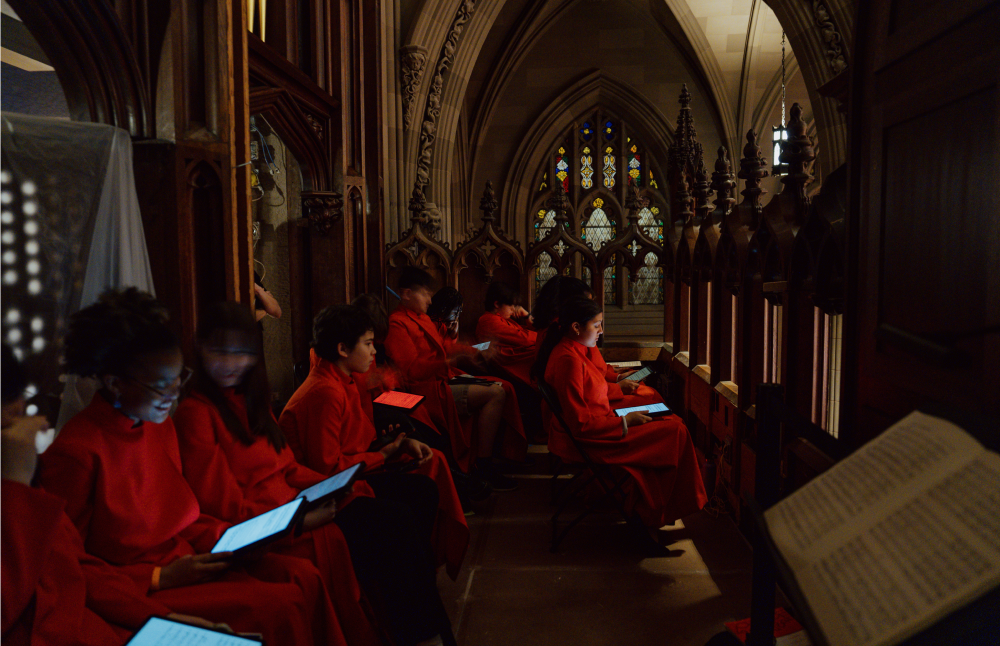
At Trinity, we’re passionate about our mission to bring the joys of music to the next generation. This year, to ensure that everyone — including children and students from our educational partnerships — can experience this divine music, we’re splitting the oratorio into two parts. So, audiences (even those with earlier bedtimes!) can enjoy Messiah without the challenging three-hour time commitment. The shorter evening performance means we can offer an extra afternoon show as well.
On December 10–12, we’ll perform Part I, which covers the coming of the Messiah and the birth of Jesus. (Longtime fans should know we'll also include the joyful “Hallelujah” and “Amen” choruses, even though they appear later in the work.) And then at Easter time we’ll present the final two parts, covering Christ’s death and resurrection. Messiah is an emotional journey; one we’ll begin together at Christmastime and bring to its logical conclusion with the Lenten season.
— Melissa Attebury, Trinity Church director of Music
Beethoven famously called Handel “the greatest composer that ever lived,” citing his ability “to achieve vast effects with simple means.” As we get swept up in this emotional journey, what should we know about its creator?
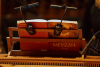
Astonishingly, Handel wrote virtually all the music in Part I in only seven days! Using a quill pen made from a bird’s feather, he began putting notes on paper on August 22, 1741, and finished all 104 pages on August 28 — dates we know because he marked them in his score. Perhaps even more stunning, we can see that when writing the opening Overture, which introduces musical language he returns to throughout the piece, he made no corrections or mistakes — it seems to have all been written in one creative flash on the first day. I can only surmise that much of the glorious music Handel composed that first week was complete in his mind before he turned it into symbols on the page. One more thing: If you feel inspired to stand when you hear the great “Hallelujah” chorus, as is the custom at many performances, know that you are in good company. We’ve learned from Handel’s followers that by the mid-1750s, audiences were motivated to rise for all “great choruses” in the work.
— Fred Fehleisen
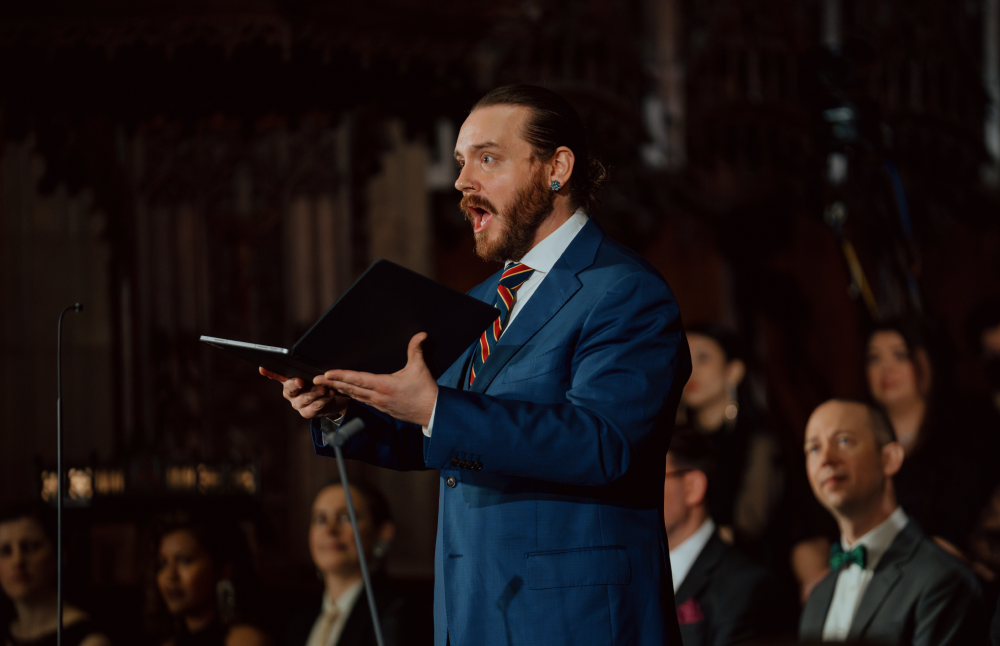
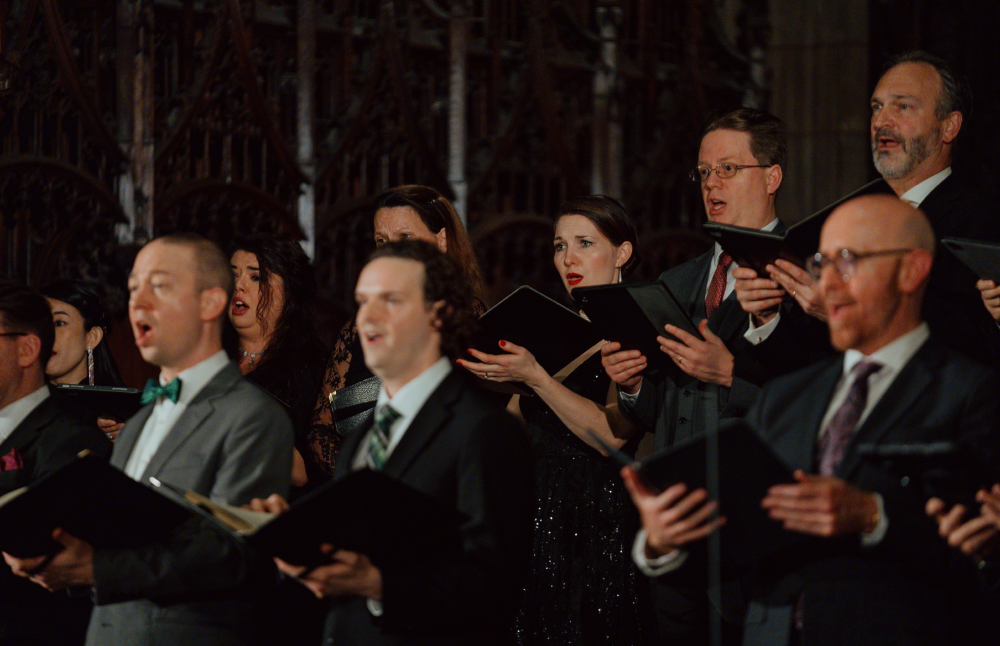
Classical performers usually dress in concert black. Why does Trinity Choir do things differently?
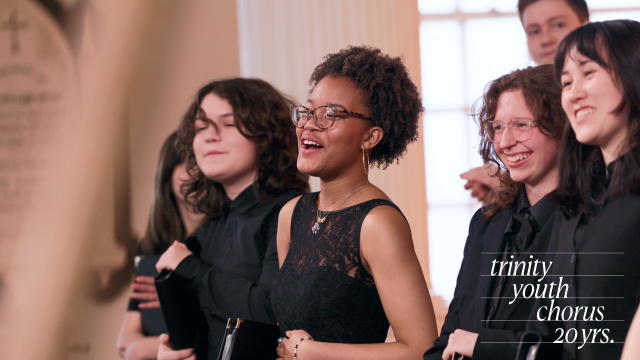
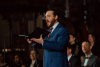
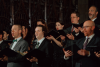
When musicians wear black, it’s because they’re meant to disappear — but that didn’t seem right for the way Trinity does Messiah. As storytellers, we can bring some visual joy as well; it’s Christmas!
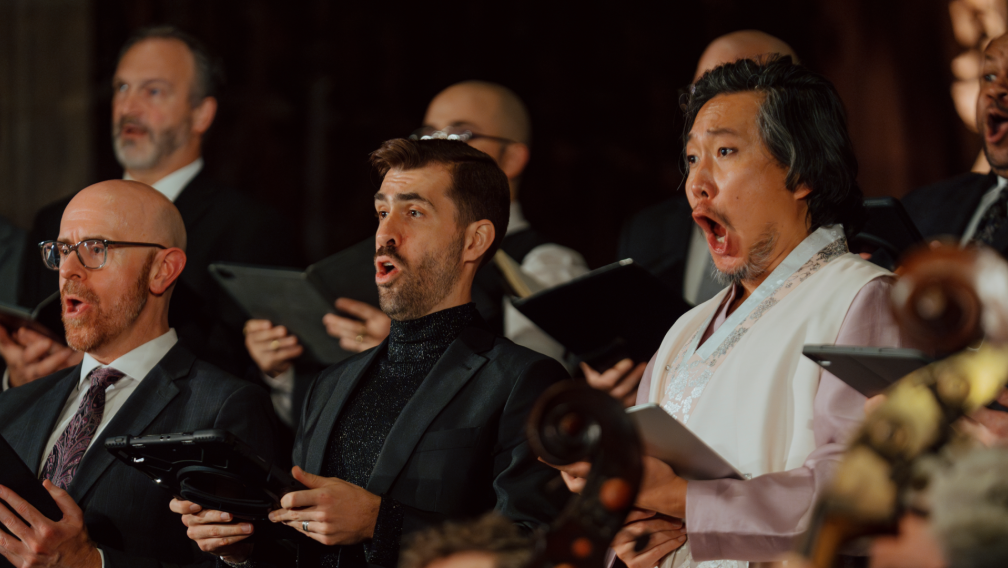
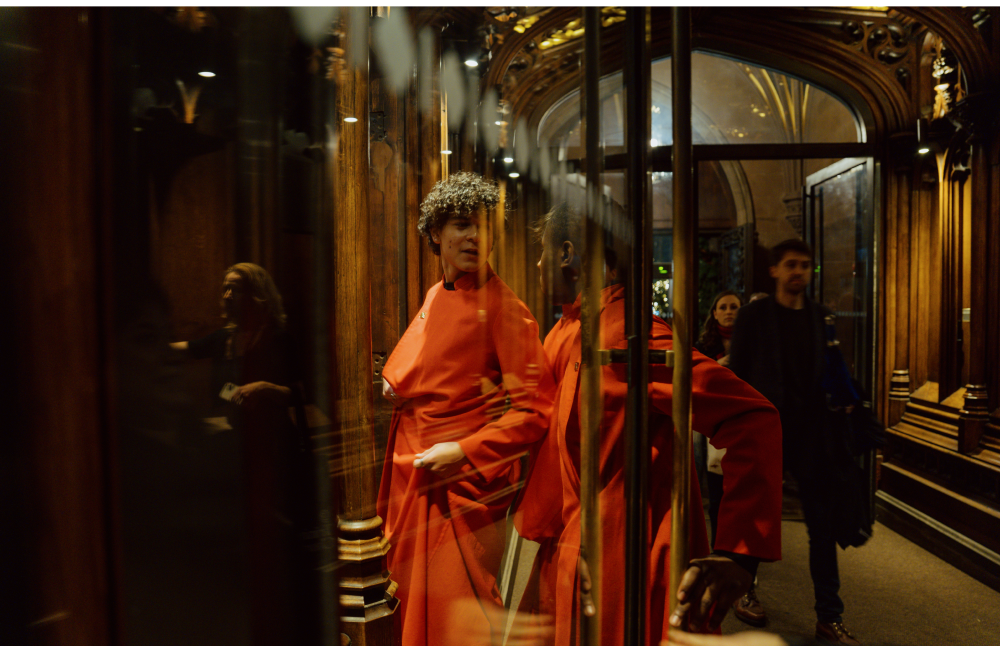
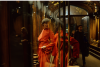
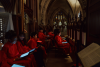
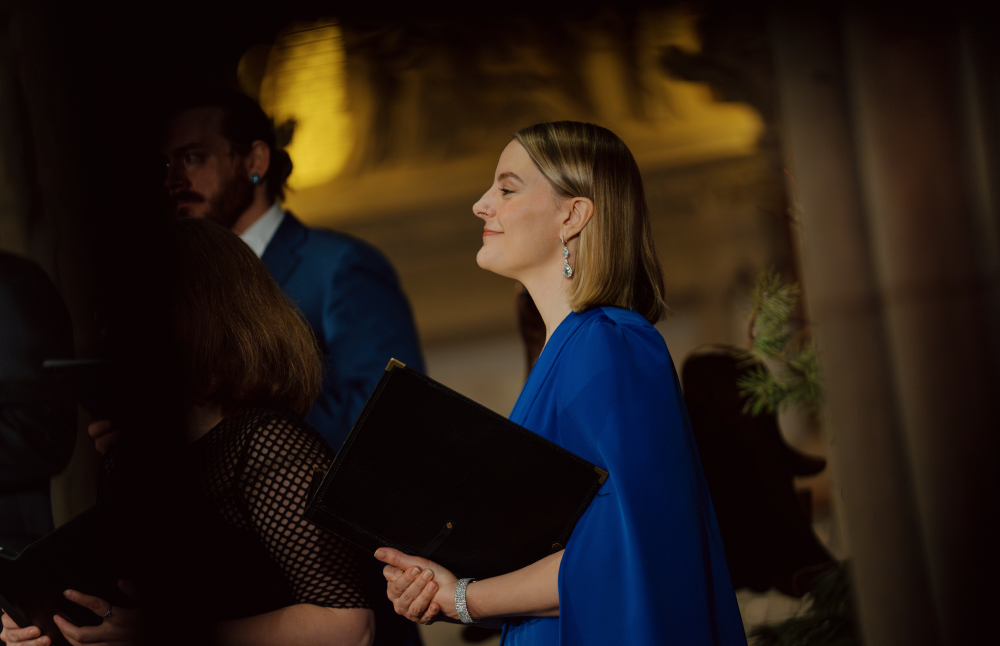
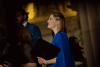
Many members of our choir perform elsewhere as soloists and have a closetful of finery — we ask them what they already own and construct aesthetic themes around their answers. Black is always part of the palette, and we’ve had everything from “Fire Night” (when we added in oranges, golds, and reds), to a blue-and-silver evening (when our performance fell on Hanukkah), to an evening that celebrated the diverse heritages of our members. One man wore his hanbok — Korean formalwear — another wore an African print. I pulled out my Scottish Black Watch plaid. Men often wear a black tux or suit but add an accent; one member has a fantastic collection of brooches that add just the right pop of color. Our audiences have something to listen to and something to look at. Honestly, I think everyone zones out for some part of Messiah, which lets them glance around and think, I love the color of that dress or Wow, look at that pin! Then boom!, another selection starts, and they’re swept up all over again.
— Elena Williamson, Trinity Choir member since 2014
Watch the 2025 performance! Messiah, Part I, filmed live in Trinity Church on Friday, December 12, 2025.