
Embracing Hope in Challenging Times
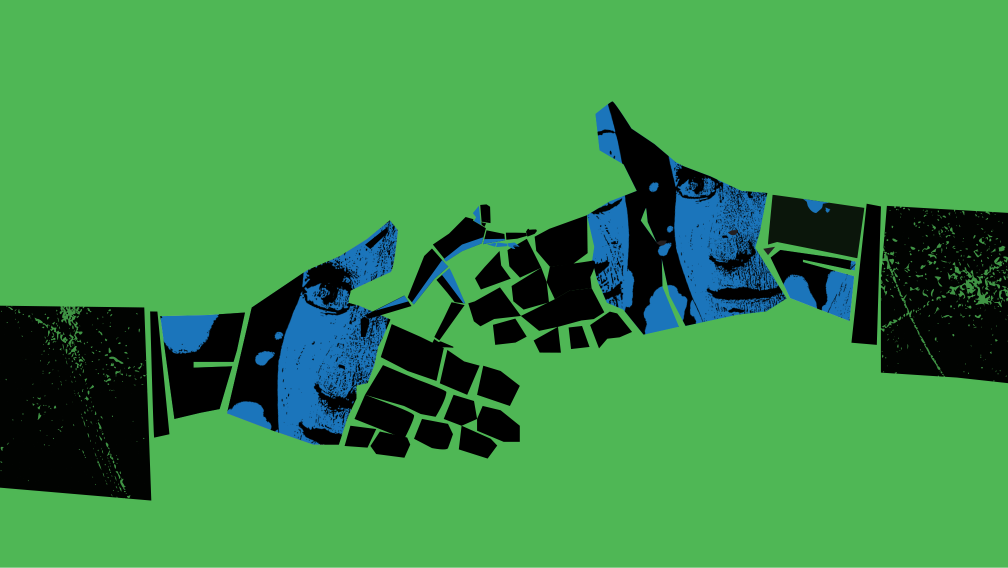
Beginning September 28, Trinity’s new Discovery season empowers us to face life’s difficult moments with love and courage.
“Christian hope is not something you believe; it’s something you do,” says Summerlee Staten, executive director of Faith Formation and Education.
That enduring truth captures the heart of the Discovery fall season: We engage our faith more fully by fully embracing our lives, even the things we’re eager to avoid.
“We build hope by facing what’s difficult, by walking toward what’s challenging,” says Staten. “Growth happens when we’re uncomfortable.”
Participants can register to join the lively discussion series in person at Trinity Commons or online.
Forgiving the unforgivable
The season begins with a five-week session on forgiveness, a practice that’s both essential to Christianity and particularly relevant right now.
“Forgiveness at its core is about not dehumanizing others, even those with whom we vehemently disagree,” says Staten.
Led by Trinity clergy, we’ll explore not only the why of forgiveness but the how. The Rev. Michael Bird, the Rev. Kristin Kaulbach Miles, the Rev. Patrick Williams, and the Rev. Phil Jackson will show us that the courage required to forgive is the exact fortitude we need to show up faithfully in today’s world. Without forgiveness, it’s impossible to love and serve our neighbors — and that includes everyone.
“When Jesus speaks of loving your enemy, it’s not hyperbole and it’s not symbolic; he’s serious. But that doesn’t mean acquiescence or complacency in the face of injustice,” says Staten. “Forgiveness is ultimately the most radical form of resistance. It’s disarming, and it requires you to have courage.”
The end of all things
Beginning November 9, the focus shifts to the peculiar and misunderstood Book of Revelation, an apocalyptic, richly symbolic piece of Scripture often correlated with frightening modern-day events. But seeing Revelation as a handbook for a predetermined end-of-the-world timeline isn’t helpful.
“Apocalyptic thought in the Bible may seem scary — but it’s not disaster literature,” says Staten. “It’s not meant to be fear-based; it’s rooted in hope.”
Theologians Craig Koester, Robyn Whitaker, and Scott MacDougall will guide us as we delve into the complex meaning of this sweeping text. By engaging its nuance, understanding its real-world context, and investigating its connection to church doctrine, we’ll gain new insight into what it means to be a Christian in a time of injustice.
Together we’ll see how the Book of Revelation points to both a present and a not-yet reality: We are, and will be, one with God. And in that unity, the work of justice is made complete.
“Things are not as they should be, but God is already repairing and restoring, and we’re invited to participate right now,” says Staten. “The Book of Revelation ultimately ends with an unveiling of God’s cosmic vision for the world.”
The gift of grief
Finally, on December 7 and 14, author Barbara Becker joins us to discuss her memoir, Heartwood: Living with the End in Mind, and offer practical instruction for thoughtfully navigating mortality and grief.
“Your life is short. And you want to live with intention,” says Staten. “Each of us has a spiritual telos, a direction in which our life is going. And that direction should be meaningful, not a path you chose because you were afraid.”
Likening loss to the heartwood of a tree — the strong core that is dead but supports new growth — Becker suggests it’s by turning toward these hard realities, rather from away from them, that we truly come alive.
“Ultimately this Discovery season,” says Staten, “we’re inviting folks to move from fear to faith — the place where hope and courage meet.”