





Local Solutions, Lasting Change
Halfway through their five-year, $5 million partnership with Trinity, Episcopal Relief & Development is channeling God’s love into service to transform lives and empower communities across the globe.
In southern Brazil, a region almost completely destroyed by catastrophic flooding experiences an economic rebirth. A project in Kenya brings accessible drinking water and irrigation to a community devastated by water scarcity. And in Tanzania, a microfinancing model empowers a group of women to start their own businesses and begin to lift themselves and their families out of poverty.
Each of these success stories represents the wisdom of following a core principle of international aid: Recipients must have a voice in decisions that affect their lives. That idea is also the founding notion of the organization known as Episcopal Relief & Development, which centers its global mission on working in partnership with local faith leaders and communities. Established in 1940 as The Presiding Bishop’s Fund for World Relief, the group originally worked to assist refugees fleeing Europe at the onset of World War II. Today, leveraging its extensive, long-established network, the organization reaches over four million people each year by focusing on a set of interconnected priorities: nurturing the potential of caregivers and young children; reducing violence against women and girls; strengthening communities’ resilience to climate change; and facilitating preparedness, response, and recovery activities to respond to disasters.
Trinity’s $5 million contribution to this work — the largest the church has provided to a single recipient — has helped provide a critical flow of aid at a time when government funding from the United States has been drastically reduced. “Episcopal Relief & Development is a powerful reflection of how faith communities can mobilize timely, strategic aid,” said Beatriz de la Torre, Trinity’s chief philanthropy officer. “After the success of our work together during the COVID-19 pandemic, we decided to increase our financial commitment with Episcopal Relief & Development. We know firsthand that the organization can deliver lasting change during moments of crisis.”
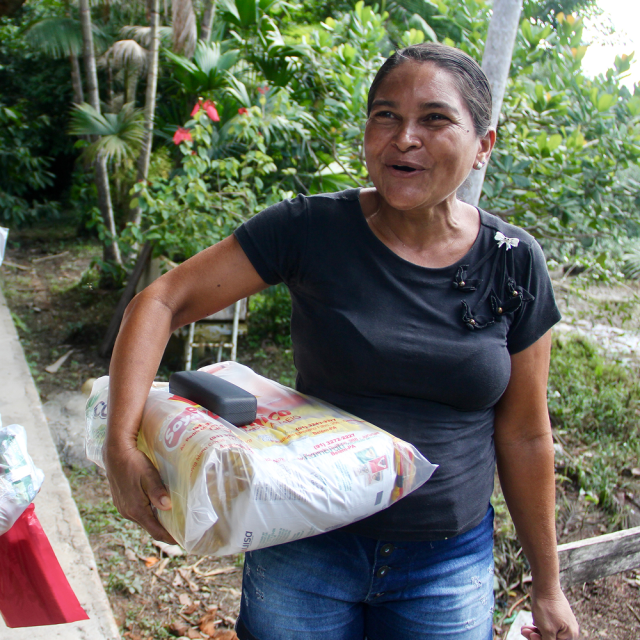
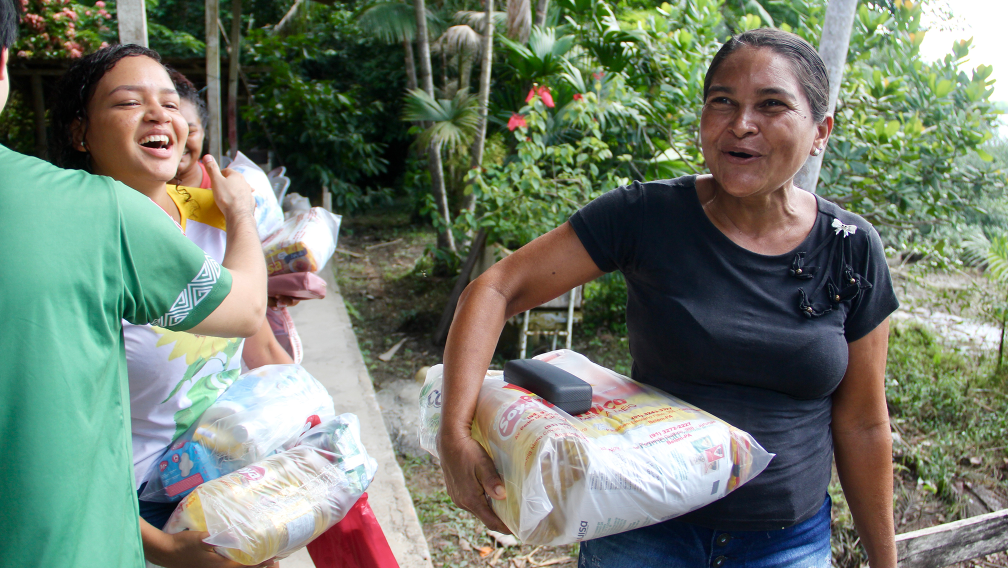
In 2024, after massive floods in southern Brazil left residents without food, hygiene products, baby supplies, pet food, and clothing, Episcopal Relief & Development immediately coordinated with Serviço Anglicano de Diaconia e Desenvolvimento (SADD), the development arm of the Episcopal Anglican Church of Brazil, to provide these basic resources to more than a thousand households. In order to reach those most in need first, volunteer teams were mobilized to map and identify vulnerable residents, prioritizing households living in poverty and those with young children. Local youth networks were enlisted to help transport necessities provided by local suppliers. Weeks later, when the operation was over, organizers — all of whom were community-based — remained as a newly formed network of responders who could be deployed in the event of the next disaster.
“Strengthening the ability of households and communities to adapt to climate change and other crises requires a holistic approach,” says Vanessa Pizer, Episcopal Relief & Development’s director of climate resilience initiatives. Her organization is intent on providing more than relief after a natural disaster; it builds on a community’s strengths, assets, and resources to provide a foundation for resilience that is not reliant on external funding.
In Kenya, where water scarcity has long been an issue in the semi-arid Kenyan subcounty of Mbeere South, the organization worked with the Diocese of Mbeere on a project aimed at providing water, while also setting up the community for longer-term climate resilience. The project, at the Diocese's Guardian Academy Center primary school, involved designing and constructing a water tank for the school and a holding pond capable of storing and supplying water to nearly 300 households.
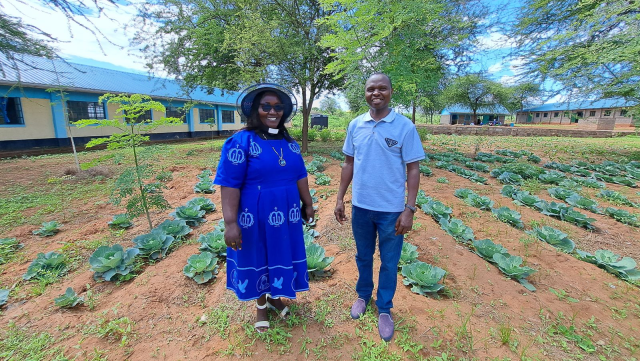
The impact was immediately felt by all members of the community. Before the projects, children would rise early to join their families in obtaining the day’s water from the nearest river — nearly two miles away — before arriving at school utterly exhausted. That’s no longer the case. “The time children once spent fetching water from the crocodile-infested river can now be used for their studies and their homework,” says the Ven. Johnson Mutuota, the area’s archdeacon. The school’s water tank also supports a new, student-tended garden — a resource that would have been unimaginable in years past.
Episcopal Relief & Development has also centered its work on the scriptural mandate to help the most vulnerable members of our global community. In Pizer’s words, that translates into “co-designing interventions with local partners that take into account the barriers faced by the most marginalized subsets of the population.” And in many parts of the world, this means women and girls.
One such intervention is the Savings with Education (SwE) microfinance methodology, which Episcopal Relief & Development incorporates into nearly every one of its core initiatives. SwE combines education and training in financial literacy, business, health, and other topics identified by group members with a savings and loan model that grants economically marginalized people access to group-generated capital and financing — often for the very first time in their lives.
To establish a new SwE chapter, Episcopal Relief & Development works closely with its partners to mobilize communities to participate in the program and to train local volunteers as facilitators and mentors. “Groups are led and managed by their members, who determine the governance structure and group rules. They pool their savings to invest in their own businesses, the future of the collective, and the broader community,” says Pizer. “The fact that groups are member-led promotes solidarity and social cohesion — both of which are essential to their sustainability.”
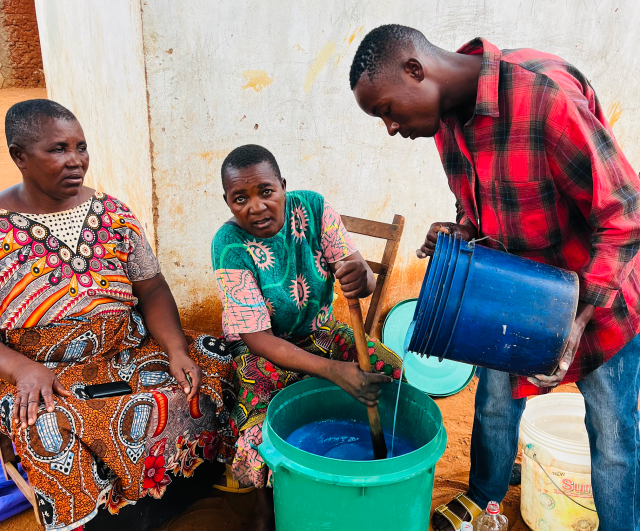
In the Tanzanian village of Mnkola, the model recently helped give birth to a thriving enterprise that began with a $99 purchase of two large bags of sugar. After taking classes outlining the fundamentals of finance and entrepreneurship, Emilia, a 39-year-old wife and mother, and nearly two dozen other members of her SwE group have created a business that provides their community with much-needed commodities — first sugar, later soap — while also giving group members a steady source of income, including profits that can be reinvested in the business. Emilia, the facilitator of her SwE group, now credits it and the small business it spawned with giving her family economic stability that she hopes will create new opportunities for her children.
As Episcopal Relief & Development and Trinity reach the halfway point in their current partnership, de la Torre says she hopes stories like these will inspire more giving. “Faith-based organizations are called to continue their service to those in need, no exceptions. We can’t fill the gaps that the loss of government funds created, but we can make the decision to continue giving faithfully. Episcopal Relief & Development has shown that it will continue to give faithfully, and we will, too.”
Top image: Members of a Savings with Education group receive food support packages as part of their resilience efforts in northeastern Brazil. Photo: Episcopal Relief & Development staff