Making a Neighborhood Dream Come True
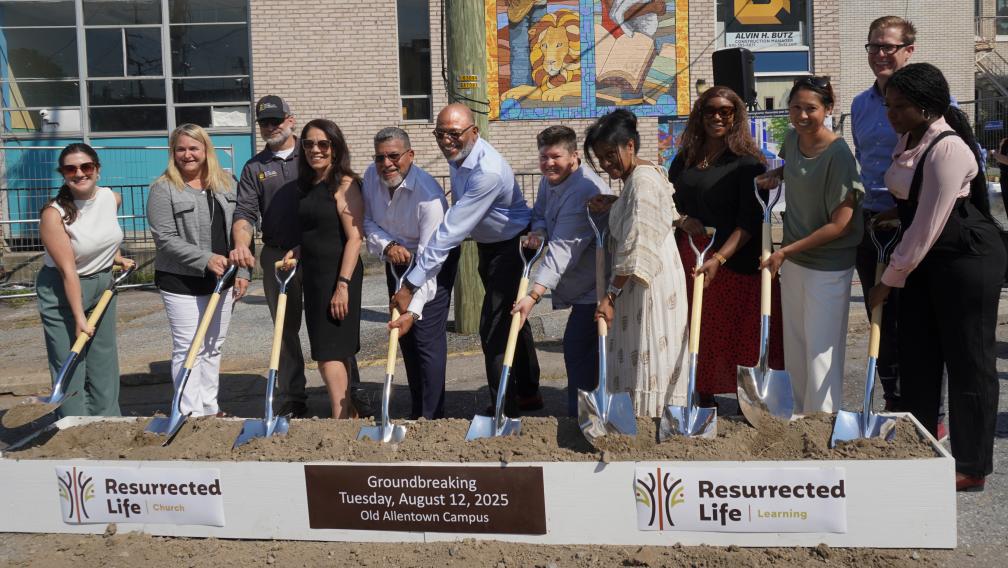
A thriving, historically Black congregation expanding its mission to educate children. A “prophetic” gift from a white parish closing its doors. A partnership between Trinity and a storied community development organization. The end result? A set of renovations that will transform a church’s ability to serve its community.
Allentown, Pennsylvania, sits roughly 60 miles north of Philadelphia and 80 miles west of New York City, putting it within commuters’ reach of two of the largest and wealthiest metropolitan areas in the United States. But here in the heart of the Lehigh Valley, gateway to the Rust Belt, nearly a quarter of the city’s 125,000 residents live below the poverty line — twice the national average.
For more than 20 years, Allentown’s Resurrected Life Community Church, a historically Black United Church of Christ congregation, has been an anchor of the city’s northeast, focused on meeting the spiritual needs of its parishioners while creating educational opportunities for the local community — the lowest income census tract in all of Lehigh County.
In 2011, the congregation’s head pastor, the Rev. Gregory J. Edwards, DMin, established the Resurrected Community Development Corporation (RCDC) as a nonprofit development corporation dedicated to providing childcare, high-quality early education, youth-oriented programming, and culturally empowering academic support. Through initiatives like its Resurrected Life Children’s Academy early learning center and its K–12 James Lawson Freedom School, the RCDC “helps close learning gaps by offering nurturing instruction, literacy development, and enrichment that many children in the community would otherwise lack,” says the Rev. Edwards.
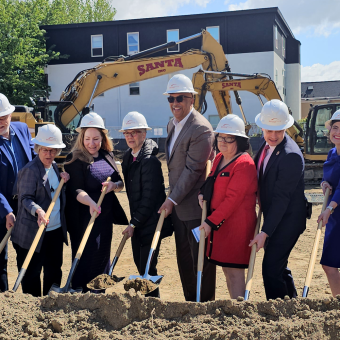
A decade later, Edwards was confronting the need for major renovations at RCDC’s campus when an unexpected gift surfaced: the predominantly white congregation of the nearby Zion Reformed United Church of Christ, experiencing declining membership post-COVID, decided to close their church and deed the historic downtown building to Resurrected Life (a turn of events the Rev. Edwards called “prophetic”). To avoid any interruption to essential educational programs and services, RCDC’s leaders quickly realized they would need to relocate students to the Zion campus while their own multi-year project was under way, incurring new renovation costs to make the temporary space suitable for students.
To help navigate the maze of challenges, RCDC turned to the Amistad Redevelopment Corporation, an arm of the UCC Church Building and Loan Fund. Amistad has a singular focus: providing congregations embarking on transformative building projects with the strategic expertise to secure financing and steer these projects to completion.
Much like Trinity’s Mission Real Estate Development (MRED) initiative, hundreds of church leaders across denominations use Amistad’s training, capacity-building, advisory, and project development services each year. “We help churches find the missional ‘sweet spot’ where the gifts and talents of the congregation meet the needs and aspirations of the communities they serve,” says Executive Director the Rev. Patrick Duggan, DMin.
Amistad’s significant field expertise and RCDC’s missional clarity were key factors in Trinity’s decision to support the project with a $500,000 low-interest loan. Funding was supplied by MRED, which works with parishes and dioceses within The Episcopal Church, as well as faith organizations from other denominations, to build sustainable financial capacity and enhance their community impact through the creative development of church property. While MRED’s team operates in the highly specialized worlds of finance and real estate development, there’s no question as to the primacy of the letter “M” in its acronym. “Mission comes first,” says MRED Managing Director the Rev. James Clark III. “Mission represents what a congregation is called by God to do today to meet the needs of people in its neighborhood. It’s where the passions, talents, and gifts of a congregation and its leadership coincide with underserved needs in the community.”
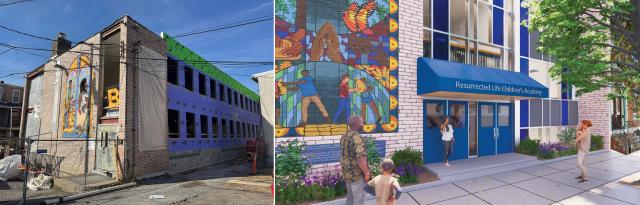
The low-interest loan originating with MRED and channeled through Amistad “will help transform our classroom spaces into a modern, safe and fully equipped learning environment,” says the Rev. Edwards of RCDC. Furthermore, he adds, “it will strengthen neighborhood stability by allowing the church to expand its educational, workforce and community programs, increasing access to quality instruction, supportive services, and opportunities for the members of this community.”
Once construction is completed in the summer of 2026, the original RCDC campus will accommodate nearly double the number of children, families, and community members who currently benefit from its programs; the six “temporary” classrooms in the former Zion building will remain — providing 120 new seats for the mostly low-income pre-K students who live in the area.

For MRED’s the Rev. Clark, these positive outcomes point to the many ways churches can use their gifts of property to strengthen their communities. “Sometimes that means creating a place for housing or healthcare, quality education or community gathering. And sometimes it means revitalizing the economic life of a neighborhood, amplifying the civic voice of its residents, and lifting the quality of life for everyone.”
For Amistad’s the Rev. Duggan, the expansion of much-needed educational and community services for the residents of Allentown is, in a word, providential. “While the specific obstacles are unique, what is always true about mission real estate projects — especially those in low-income communities — is that on the journey toward completion, there will be challenges that seem insurmountable,” he says. “At those times faith institutions have few other options but to tap into the spiritual resources of our religious traditions. These projects do not happen without tons of prayer!”
Related Articles
Trinity Church Awards $16.7 Million in Community Grants in Fall Distribution
Building Financial Resilience