

“Music Taught Me the Christian Faith”
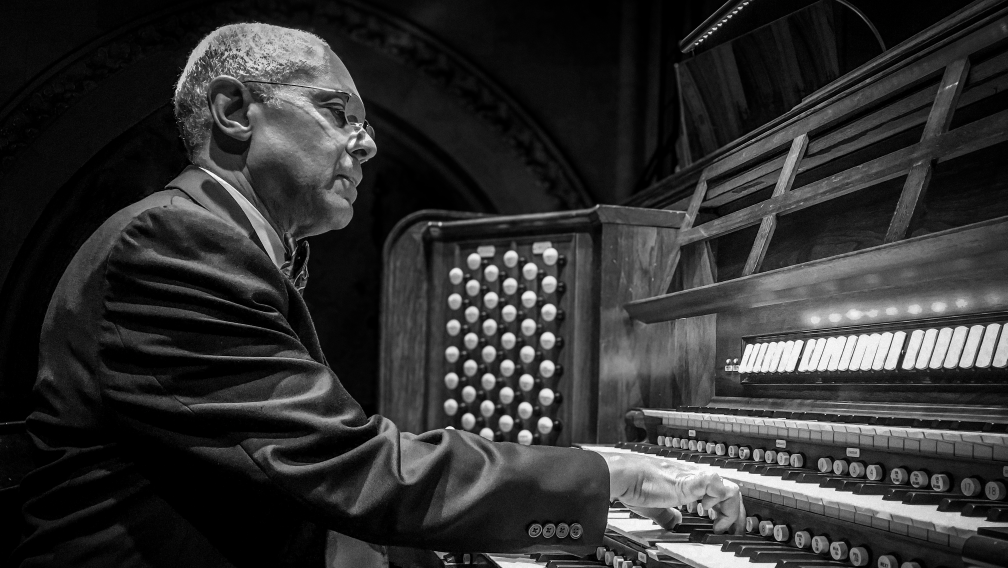
More than 50 years after finding his musical voice at Trinity, renowned composer and organist David Hurd returns to the church where it all began.
If you’ve ever stepped inside an Episcopal church, chances are you’ve encountered music by the legendary David Hurd. With dozens of organ compositions, choral works, and hymns to his name — including contributions to The Episcopal Church’s comprehensive Hymnal 1982 — Hurd enriches the musical life of congregations across the country every week. In 2010, he received the Distinguished Composer Award from the American Guild of Organists in recognition of a career shaping the soundscape of liturgical music in America.
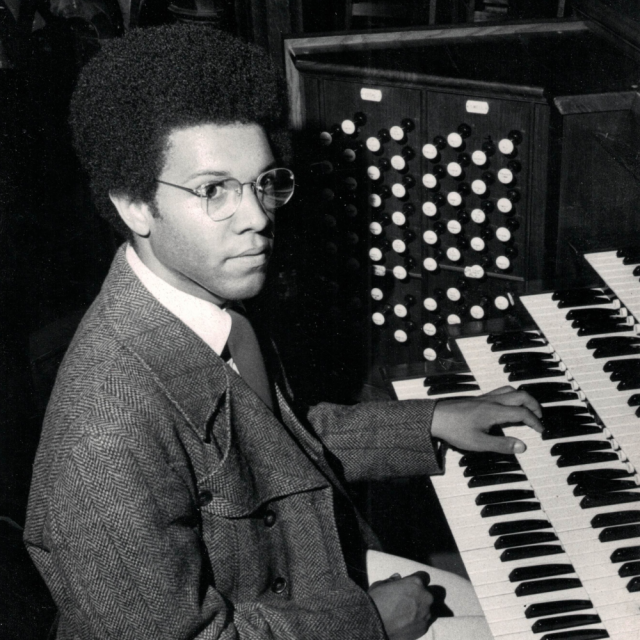
Hurd came to Trinity Church fresh out of college in 1971 as an assistant organist to then–Director of Music Larry King, during a period of liturgical renewal across American denominations: Rituals, language, and musical traditions were being reexamined in light of evolving worship practices and growing calls for inclusivity. As he began to compose, Trinity provided a path “to do new things as well as to reach back and pull out the treasures of the past,” Hurd said.
More than 50 years later, Hurd returns to Trinity on November 4 to direct a program that celebrates his legacy. Trinity organists past and present — Bruce Neswick and Alcée Chriss III — will team with Trinity Choir to present some of Hurd’s most innovative compositions.
“It's impossible not to notice the beautiful joining of generations,” said Chriss, Trinity’s current assistant organist. “David was a mentor to me early in my career. His musical accomplishments and legacy of pedagogy have impacted so many people.”
And there’s more to come: Hurd is now at work on Great Awakenings, a piece commissioned by Trinity in honor of America’s 250th anniversary. It was King, Hurd’s mentor, who wrote a tribute for the nation’s bicentennial in 1976 — which means the oratorio’s premiere next spring will be a full-circle moment, honoring a creative lineage that continues to flourish at Trinity.
In a recent conversation, Hurd spoke about his lifelong passion for the pipes and what it means to write music that lasts.
You’ve had a remarkable career spanning decades. What first drew you to the organ and how did your early experiences shape your musical path?
Some of my earliest recollections are of hearing the organ and choir at my family’s Episcopal church in Brooklyn. As a small child, I used to run up to the organ console at the end of services to watch the organist play the postlude. I was fascinated by the keyboard and the sounds coming from the pipes on the other side of the church.
The combination of organ and voices is something I’ve loved from the beginning of my life. Before I was able to intellectually grasp what was going on in church, the music spoke its own language to me. I like to say that the church taught me the love of music, but music taught me the Christian faith.
Is there something about the sound and capabilities of an organ that helps facilitate a connection to God?
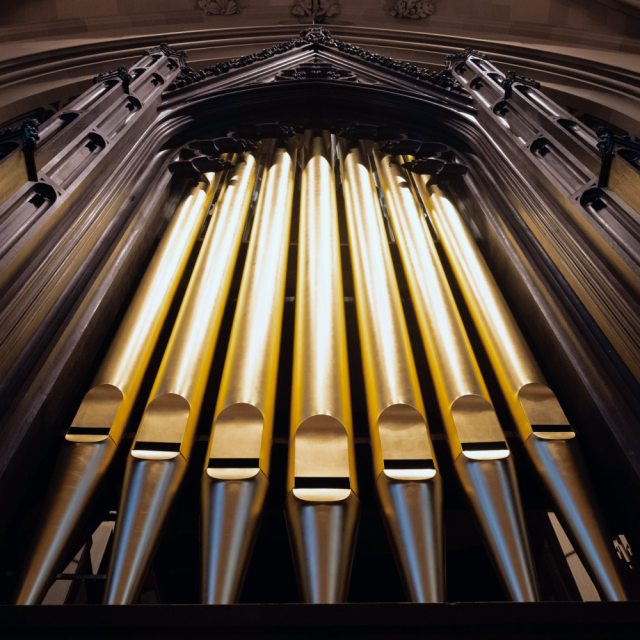
The organ is a collection of instruments, each pipe responsible for one note. By means of machinery that connects to all of these pipes, it can be operated by a single person. It’s a wind-blown instrument, and in the biblical story of Pentecost [when the Holy Spirit filled the disciples], the sound of the spirit is described as a “mighty wind.” So symbolically, I think the organ subliminally suggests the voice of God. The breath that animates the sound of the organ is like the breath of life. It undergirds the singing, supporting the voice of the church, the voice of the people.
As a former assistant organist at Trinity in the early 1970s, you were an important part of our church community. What do you remember most vividly about that time and how did it shape your musical journey?
It was an exciting time at Trinity. The tradition was expanding under Larry King, and very creatively. Larry gave me permission to explore my own creativity because he modeled it. He was experimenting with new instrumentations and commissioning new works, and at the same time, we were singing the great music from the 16th and 17th centuries. As he approached what he considered the end of his performing career, he asked me to write a piece for him — which led to my largest organ work, Te Deum Laudamus. It was inspired by an ancient Latin hymn, and Larry premiered it in 1982. I’m thrilled that Bruce Neswick, a fellow Trinity music alumnus and a dear friend, will be performing it at our upcoming concert.
You’re currently working on Great Awakenings, an oratorio that draws inspiration from the writings of John Henry Hobart, New York’s third Episcopal bishop and Trinity’s rector from 1816 to 1830. Tell us about your creative process. What helps you tap into your musical inspiration?
This opportunity to write this new piece is something I’m really looking forward to. Most of my compositions begin with text. The words offer a channel of direction because words have meaning and sound. I’ll think about where the consonants are, where the vowels are, and what kind of melodies are suggested. Is the text suggesting agitation? That might mean low rumbling or it might mean a jagged rhythm. Or is there a relaxed, soothing ambiance? I’ll consider the text over a long period of time. Sometimes, I'll sit at the piano and just put the text in front of me and improvise, singing along to see what ideas stick. When something sticks, then I go to my desk and start to shape it.
When you look back on your career, what are you most proud of?
I do look back on my career, but I don't think my career is entirely behind me. I started off intending to be a performer, and I'm very pleased to have performed music for many people over the years. But I’m also glad to have increasingly claimed my place as a composer. Concerts are stimulating in the moment, but compositions have a way of representing you long after you've stopped performing. In the way I have treasured the life and work of so many composers of the past, I think that to be in the lineage of composition, to leave music behind for others to interpret and learn from, is a great privilege.
David Hurd will conduct a program of his own works at Trinity Church on November 4 as part of PIPES: A Season of Celebration. Save your seat and see the full season lineup.
Sign up for our music newsletter to get ticket updates for Great Awakenings: John Henry Hobart and America, premiering May 31, 2026, at Trinity Church.