Discovery: Fall 2025
Sundays at 10am
September 28–December 14
Join our weekly discussion series to explore hot-button topics like forgiving the unforgivable, living through extraordinary times, and the meaning of grief. Together we’ll uncover profound spiritual truths and seek answers that challenge us to put faith into practice.
Revelation and the End of All Things
Are we living through the apocalypse? Is this timeline scripted in the Bible? Is Jesus coming back soon? Dig into the odd and often misused Book of Revelation with leading scholars and theologians. We’ll resist our inclination to correlate modern-day events and ancient texts and build a new end-times framework centered on mercy, justice, and a God whose love is not bound by space and time.
Craig Koester on the Book of Revelation and the end of everything
November 9 | Watch the video
Robyn Whitaker on the symbols and meaning of the Book of Revelation
November 16 | Watch the video
Scott MacDougall on Christian eschatology (the doctrine of the end)
November 23 | Watch the video
Additional resources
- “Revelation: What does hope look like?” by Craig Koester | In this video, Craig Koester briefly describes how the Bible — and even a book like Revelation — can be a source of hope through its consistent reminders that God is present to us in difficult times and that Jesus overcomes sin and death through love and life.
- “Grappling with the Misuse and Misinterpretation of Scripture with Robyn Whitaker” by Eerdmans Publishing | While Robyn Whitaker is a scholar of the Book of Revelation, she also writes on broader misuses of the Bible. Here she describes some of the ways she sees the Bible — including Revelation — being misused in the world today.
- “Faith in the Future is No Faith at All: Disney’s Weak Theology” | In this article, Scott MacDougall criticizes fairytale visions of the future where we will be saved by a few heroes. Instead, he says, the Bible casts a vision of the future where everyone has a part to play in the creation of a better world.
- John Martin’s “Last Judgement” Triptych | Not only monumental examples of the “apocalyptic sublime” in artwork, these three paintings were toured and reproduced throughout the world, defining how many 19th-century people imagined the end of the world.
- “The Revelation of the Book of the Revelation to John” by The Very Rev. Samuel G. Candler | Revelation contributes a surprisingly large amount to our liturgies in The Episcopal Church. Here is a sermon on why that should not be so surprising, given that Revelation is a very liturgical text.
- The Book of Revelation study | Here at Trinity we have a Bible study on Revelation that you can do on your own! It is designed and led by the Rev. Michael Battle and draws from his book Heaven on Earth: God’s Call to Community in the Book of Revelation.
The Art of Living with the End in Mind
Can we live our lives more fully by embracing the inevitable — that one day we will die? Author Barbara Becker suggests death can be a source of strength; it’s by turning toward loss, rather than away from it, that we become truly alive. In a world afraid of endings, Becker’s empathic work offers practical insight and instruction for grieving in a way that brings us together to make the most of the time we’ve got.
Barbara Becker on her memoir, Heartwood: Living with the End in Mind
December 7 and 14
Additional resources
- “Heartwood: The Cycle of Life and Loss with Barbara Becker” from the End-of-Life University podcast | In this video conversation with Karen Wyatt of End-of-Life University, Barbara Becker explains the metaphor of heartwood (the solid pillar that supports the growth rings on a tree) and how the lessons of her book hold true in her own life circumstances of death and loss.
- Let’s Talk Death podcast with Barbara Becker | Barbara Becker shares how witnessing her friend living her fullest life — even after being diagnosed with a terminal illness — inspired her to think differently about the richness of life.
- Barbara Becker’s resource page includes links to practical information about living wills, organ donation, helpful things to say to someone in grief, and toolkits for grieving children and parents.
- This compilation of quotes from Barbara Becker’s book includes this insight: “In the perfect ecology of a tree, the dead become the heart of the living, and the living nourish the enduring essence of the dead.”
Past Sessions
The Gift and Challenge of Forgiveness
Forgiveness is hard, particularly amid intractable differences — or when you’re waiting for an apology. Yet it’s the practice at the heart of our faith. More than a pie-in-the-sky ideal, authentic forgiveness grows from the ardent belief that a better world is not only possible, but inevitable. In sessions led by Trinity clergy, learn how cultivating a willingness to forgive is tied directly to mustering the Christian courage to meet this moment.
The Rev. Michael Bird on the Lord’s prayer and forgiveness as a Christian practice
September 28 | Watch the video
The Rev. Kristin Kaulbach Miles on the relationship between forgiveness and time
October 5 | Watch the video
The Rev. Patrick Williams on how we experience God's love through practicing forgiveness
October 12 | Watch the video
The Rev. Phil Jackson on hope, courage, and the strength to forgive
October 19 | Watch the video
The Rev. Mark Bozzuti-Jones on how to forgive the unforgivable
October 26 | Watch the video
Additional resources
- The Book of Forgiving: The Fourfold Path for Healing Ourselves and Our World by Desmond Tutu | How do we forgive systematic injustice, or bridge the gap between forgiveness and reconciliation, and actively move towards healing and transformation? In this book coauthored with his daughter, the Rev. Mpho Tutu, the late Nobel Prize Winner, chair of the Truth and Reconciliation Commission to investigate apartheid-related crimes in South Africa, and friend of Trinity Church, Rev. Desmond Tutu, presents a four-fold pathway.
- The Ignatian Guide to Forgiveness: Ten Steps to Healing by Marina Berzins McCoy | For all who are inspired by Ignatian spirituality, McCoy’s work presents ten steps and “habits of mercy” we can inculcate as we journey on the difficult road towards forgiveness based on Ignatian spirituality.
- “A Forgiveness Toolkit” by the Rev. Mark Bozzuti-Jones | How do we forgive and how are we forgiven? How do we resolve conflicts and act as one body? (Re)watch this video by the Rev. Mark Bozzuti-Jones, PhD, director of Spiritual Formation at Trinity Retreat Center, and remind yourself of what might be missing in your forgiveness toolkit.
- “The Science of Forgiveness” by Fred Luskin | How does hurt, guilt, and pain affect our mental and physical health and how can forgiveness lead to greater wellbeing? In this video, Frederic Luskin, a professor at Stanford University and founder of the Stanford Forgiveness Project explains the science of forgiveness.
- The Forgiveness Project is an award-winning website that offers an array of resources including stories, podcasts, videos, and books for anyone contemplating the complexities of forgiveness.
Speakers
The Rev. Michael A. Bird was named vicar of Trinity Church in December 2020. Before coming to Trinity, Father Bird was the rector of Christ Church in Bronxville, New York. Throughout his career, Father Bird has focused on building and fostering vibrant communities of faithful people, with a particular emphasis on youth. Father Bird holds a bachelor’s degree in history from Swarthmore College and a Master of Divinity from General Theological Seminary.
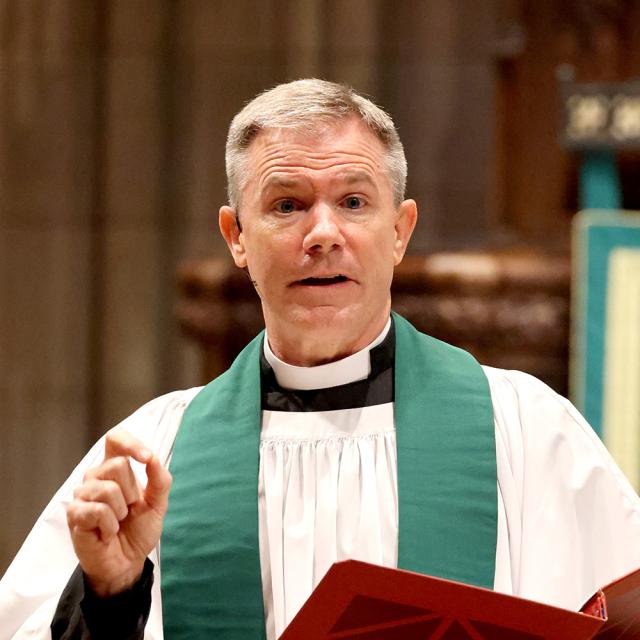
The Rev. Kristin Kaulbach Miles is priest and director for Parish Life at Trinity Church in New York City. In this role, she oversees the work of pastoral care, sacramental preparation and liturgies, and community engagement. Prior to joining Trinity, Mother Kristin, a board-certified chaplain, was the attending chaplain at Yale New Haven Children’s Hospital.
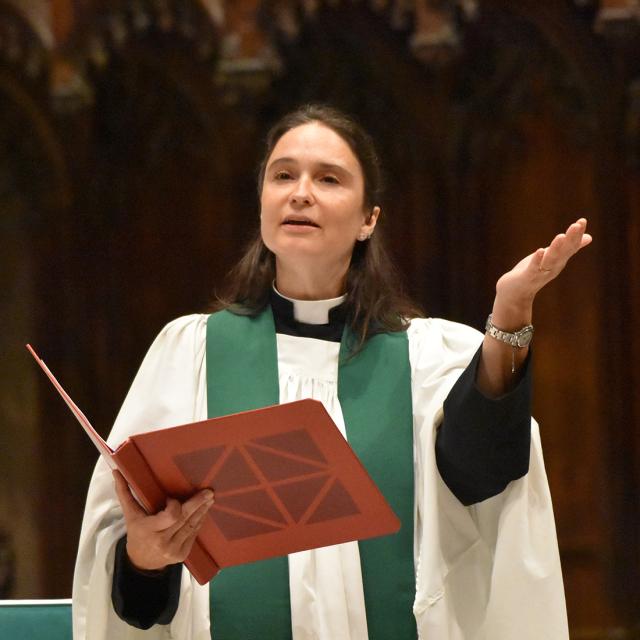
The Rev. Patrick Williams was ordained to priesthood in 2013. Before joining Trinity Church in July 2024, Father Patrick served parishes in Harlem and Memphis and served as interim chaplain at the Cathedral School of St. John the Divine in New York. Prior to ordination, Father Patrick spent a decade in the financial services industry. He obtained a BS from Tennessee State University, an MS from Carnegie Mellon University, and an MDiv from Virginia Theological Seminary. He lives on the Lower East Side of Manhattan with his spouse, two kids, and a rotating cast of grandparents and relatives.
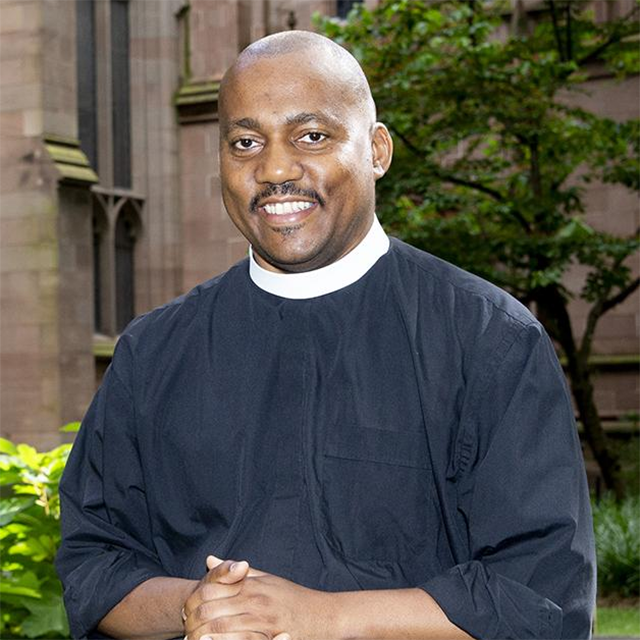
The Rev. Phillip A. Jackson was named the 19th rector of Trinity Church in February 2022. Father Phil joined Trinity in 2015 as vicar and served as priest-in-charge for two years. Ordained in 1994, he has served parishes in Paradise Valley, AZ, Houston, and Detroit, and he worked as an attorney in Honolulu. Father Jackson holds a bachelor’s degree in history, cum laude, from Amherst College, where he sits on the board of trustees. He also holds a Juris Doctorate from Yale Law School and a Master of Divinity from Church Divinity School of the Pacific.
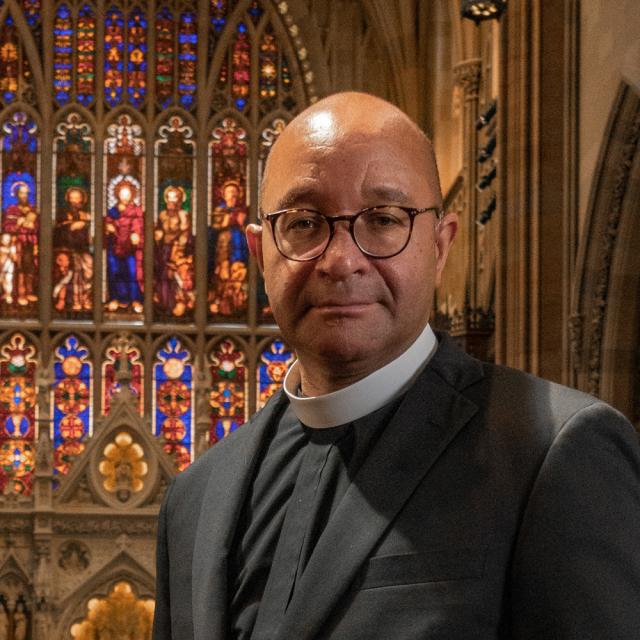
The Rev. Mark Francisco Bozzuti-Jones, PhD, is an Episcopal Jamaican priest at Trinity Church in New York City, serving as priest and director of Spiritual Formation at Trinity Retreat Center in West Cornwall, Connecticut. A former Jesuit priest, Father Mark has missionary experience in Belize, Brazil, and Guyana. His intellectual interests include the impact of social issues on faith and spirituality, racism, and the plight of the poor. He is an award-winning author whose recent books include God Created, Jesus the Word, The Gospel of Barack Hussein Obama According to Mark, and The Rastafari Book of Common Prayer.
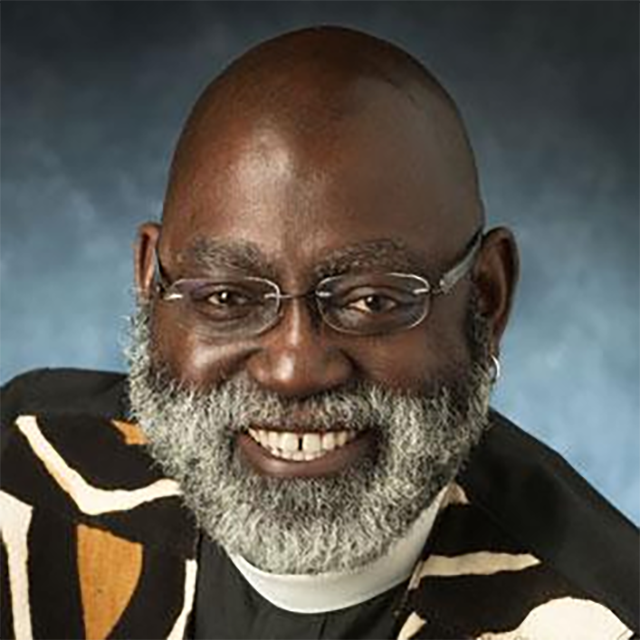
Craig Koester is the Asher O. and Carrie Nasby Professor emeritus at Luther Seminary in St. Paul, MN. He received his PhD from Union Theological Seminary in New York and is an ordained Lutheran pastor. His publications include the widely used Revelation and the End of All Things, a major commentary on Revelation, and the Great Courses series “The Apocalypse: Controversies and Meaning in Western History.”
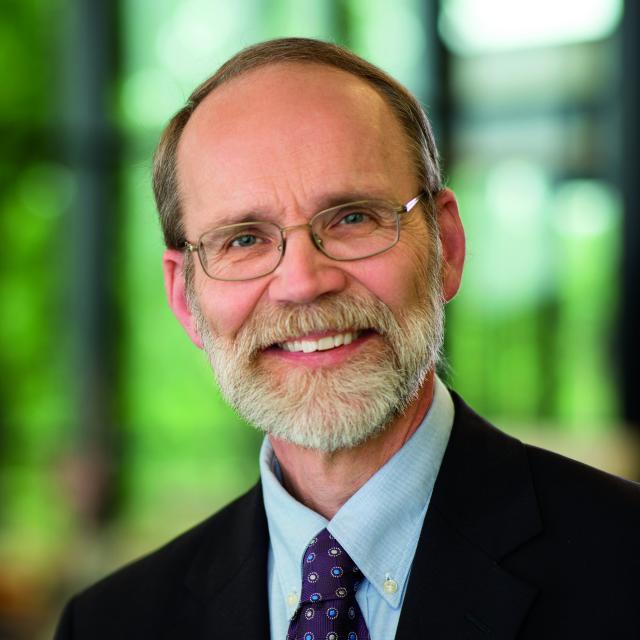
Robyn Whitaker is an associate professor of New Testament at the University of Divinity and executive director of The Wesley Centre for Theology, Ethics, and Public Policy in Melbourne, Australia. She holds a PhD from the University of Chicago Divinity School and has previously taught at Union Theological Seminary and Princeton Theological Seminary. Robyn publishes in the areas of apocalypticism, the book of Revelation, the Gospels, violence, and the visual exegesis of the Bible. Her recent books are Even the Devil Quotes Scripture: Reading the Bible on Its Own Terms and Revelation for Normal People. She is ordained in the Uniting Church in Australia.
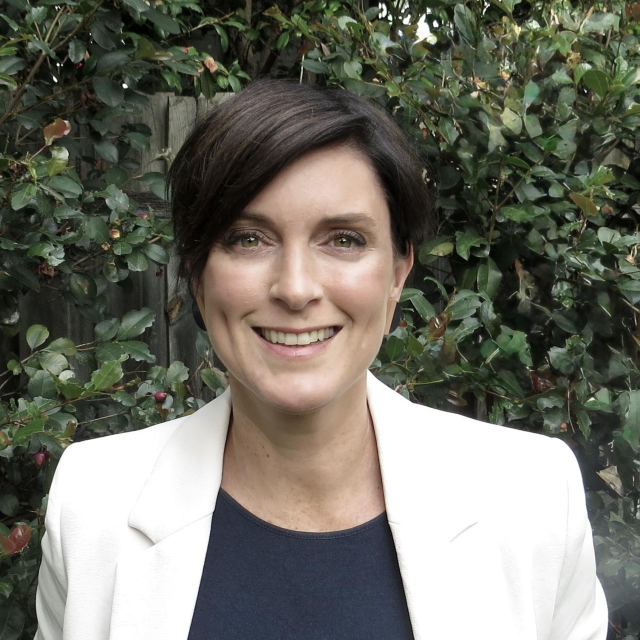
Scott MacDougall is associate professor of Theology at Church Divinity School of the Pacific, where he has taught since 2015. Born and raised in central New York, he received his BA from Hofstra University. Following a career in the not-for-profit sector, he undertook the formal study of theology, receiving his MA in theology from General Theological Seminary in 2007 and his PhD in systematic theology from Fordham University in 2014. His most recent book, The Shape of Anglican Theology: Faith Seeking Wisdom, was published by Brill in May 2022. MacDougall has served as co-editor-in-chief of the Anglican Theological Review and was the inaugural theologian to the House of Deputies of The Episcopal Church.
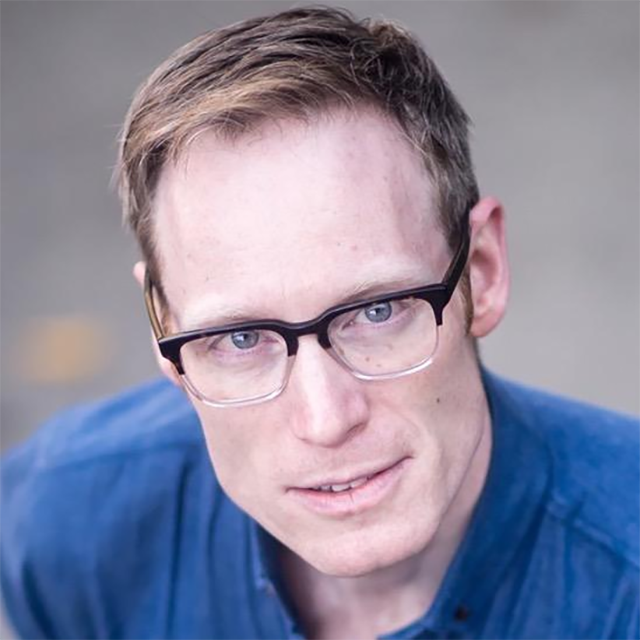
Barbara Becker is an ordained interfaith minister who has sat with hundreds of people at the end of their lives. Bridging the sacred and secular, she has dedicated more than 25 years to partnering with human rights advocates around the world in pursuit of peace and interreligious understanding. She has worked with the United Nations, Human Rights First, the Ms. Foundation for Women, and the Grameen Bank of Bangladesh. She lives in New York City with her interfaith family.