



What Is Ordinary Time?
The longest season of the church year shows us how to live in the moment
As Episcopalians we spend most of our church year living in anticipation — bracing for Christmas, planning for Easter. But there’s a time on the calendar notably absent of major holidays: Ordinary Time (officially the Season After Pentecost). And through the summer and fall, we’re living in it.
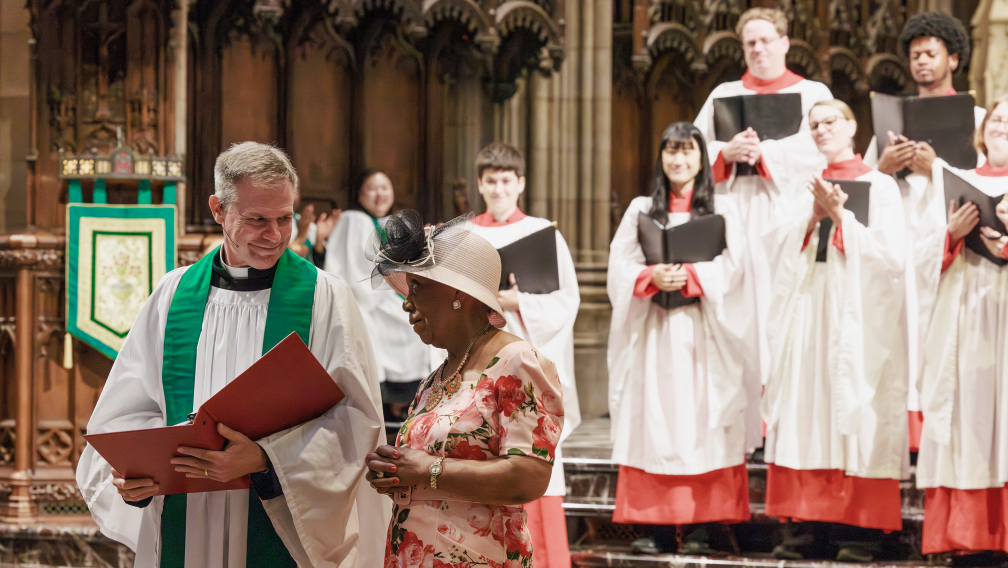
“Most of the year we’re preparing for something, getting ready for a cornerstone event in the Church,” says the Rev. Kristin Kaulbach Miles. “In the same way, we can spend much our lives living with expectation. This ‘ordinary’ season may open us to the appreciation of what is, not just what’s next. Anticipation is not sustainable at all times.”
The length of the season varies from 24 to 29 weeks, depending on the date of the preceding Easter, which is a moveable feast day. It begins the Monday after Pentecost and ends the day before the First Sunday of Advent.
“Ordinary Time” is a phrase borrowed from the Roman Catholic Church, and it does not appear in the Book of Common Prayer, a centuries-old guide to Episcopal worship. Though the name is fitting for a season without spectacle or fanfare, it has more to do with ordinal numbers, or counting the days, than being commonplace or unremarkable.
“I love Ordinary Time because there aren’t big intensities,” says Mother Kristin. “When we’re not focusing on the future or the past, the highs or the lows, we have the space and presence to bring our mind, body, and spirit together in one place.”
The assigned Scripture readings during most of the year follow the narrative arc of Jesus’s life on earth (his birth, death, and resurrection). They guide us through our observances of Christmas and Easter. But our Ordinary Time passages are arranged thematically and offer the opportunity to meditate on Jesus’s teaching and example in a different way. The focus shifts from Jesus’s point of view to our own — and how our growing awareness of God’s love might take root in our everyday lives.
“We look to Jesus, who was fully engaged in his life. Yet he often went off to a quiet place to pray. Though many things called for his attention, he carved out and modeled for us rhythms of rest.”
With even our summer days packed and scheduled down to the minute, we live in a world that treats rest as a reward instead of a requirement. But Sabbath, which we might think of as letting things be, has been part of God’s story from the beginning. Just like plants, humans need time to grow. Green, the liturgical color for the season, is a simple reminder that all living things need space and nourishment.
“Ordinary Time gifts us the opportunity to practice rhythms of rest in our own lives,” says Mother Kristin, “and we can carry that lesson with us through the whole year. Life doesn’t always have to be a big, dramatic thing to be worthwhile. Even the ordinary is miraculous.”