



Church, Politics, and America Today

Illustration by Brian Stauffer
Five days after the 2026 midterm elections, two Pulitzer Prize–winning journalists will join Trinity Talks to explore what lies ahead for democracy, identity, and Christianity in America.
From the founding of the first colonies to the present day, Christianity has shaped America’s story. For just as long, American Christians have held vastly different opinions about every part of that story — who should tell it, what gets included, and what it requires of Christians today. As the country approaches another consequential election, many of the same questions have resurfaced. What does it mean to follow Jesus in a fractured society? And what effect does polarization have on Christian communities across the political spectrum?
These questions are at the heart of the next Trinity Talks, part of our ongoing series of conversations that explore faith, justice, and community. On Sunday, November 8, Pulitzer Prize–winning journalists Eliza Griswold and Stephanie McCrummen will join us for Christianity in America Now, a panel discussion on the role of the church in this moment.
McCrummen, a staff writer at The Atlantic, has spent years reporting on the religious and political currents that are reshaping American life. Her work explores the rising influence of a militaristic strain of Christianity that believes God wants Christians to exert control over all aspects of American life, from government to education to media. Her reporting offers valuable insight into how these movements understand themselves and why they continue to resonate with many Americans.
Griswold, a journalist whose work covers the intersection of religion, politics, human rights, and the environment, offers a complementary perspective. Her book Circle of Hope: A Reckoning with Love, Power, and Justice in an American Church tells the story of a progressive evangelical church navigating difficult questions about privilege, inclusion, and institutional change during the Covid-19 pandemic. Its experience underscores a challenge facing many churches and institutions today: What happens when people can no longer agree on a common story about who they are and what they are called to do?
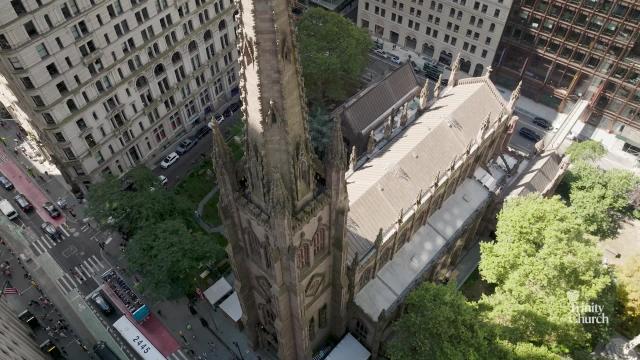
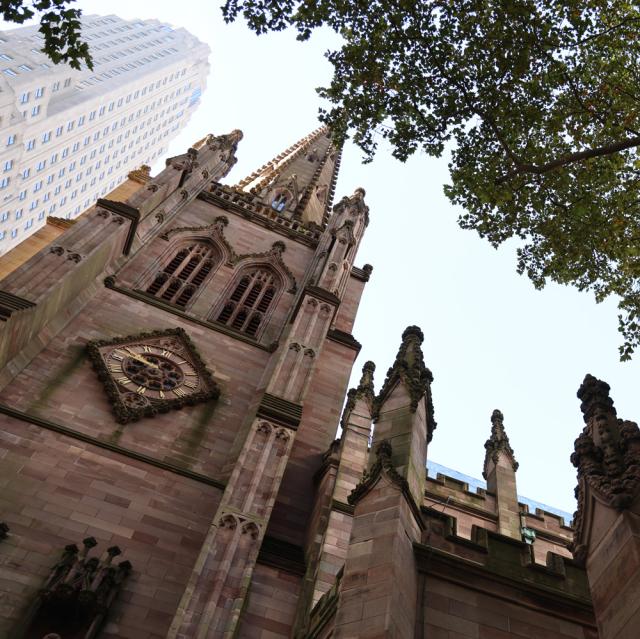
In many ways, that challenge echoes throughout American history. Again and again, debates about faith have been turning points in the nation’s development. As a parish with more than 300 years of history in New York City, Trinity Church has witnessed such moments from the time of our founding. Our church and our congregation have seen and participated with joy in those times when faith helped expand the nation’s moral imagination. And we have witnessed the pendulum swing as religious conviction becomes entangled with prejudice and fear.
History tells us that whenever the nation reaches a cultural crossroads, Christianity is drawn to the center of the debate. The Constitution established a secular framework of government while guaranteeing the free exercise of religion, setting up a delicate balance between faith and public life that Christians would wrestle with for years to come. Christians stood on opposing sides of the Civil War, with abolitionists and defenders of slavery each appealing to their own interpretations of scripture. Later, advocates of the Social Gospel responded to the inequalities of industrialization by using Christian ethics to challenge worker exploitation and urban poverty. During the civil rights movement, religious leaders called the nation to live up to its moral commitments, framing racial justice as a matter of faith. In the late twentieth century, conservative Christians organized into a powerful voting bloc in response to rapid social and cultural change.
Bridging Faith and Politics Today
With the rise of the Christian Right fueling new debates about politics and religion, America is at another inflection point. Surveys from the Public Religion Research Institute (PRRI) and Pew Research Center reveal significant differences in how Christians in each party approach a range of moral issues, from immigration to racial justice. These divisions extend to fundamental questions about faith and politics: whether America should be primarily a Christian nation, how much influence Christianity should have on government, and what it means to be truly American.
While polarization often dominates headlines, there remains a broad and hopeful center of Americans seeking ways to strengthen the fabric of our shared civic life. A recent PRRI survey suggests that two-thirds of all Americans don’t want a narrow interpretation of Christianity to dominate law and society. In fact, most embrace religious and racial pluralism, hold welcoming views of immigrants, reject political violence, and strongly oppose efforts to erode democratic norms.
“The division we see around us can sometimes feel overwhelming, but it is not the whole story,” says Trinity’s rector, the Rev. Phillip A. Jackson. “Beneath our disagreements are shared hopes, shared fears, and a shared longing for meaning. Here at Trinity, we know that faith has the power to bridge these gaps — to create bonds across differences, to help us see every person as worthy of dignity and care.”
At a time when questions about faith, politics, and national identity feel especially urgent, our upcoming Trinity Talks offers an opportunity to engage with these issues. Join journalists Stephanie McCrummen and Eliza Griswold on November 8 for a timely conversation on how Christian communities in America are navigating this period — and where the church might be headed next.
Get free tickets to Trinity Talks: Christianity in America Now
Related articles

When Wisdom Looks Foolish (Matthew 25:1–13)

The Vulnerability of Blessing (Matthew 5:1–12)

What Is Baptism?
